|
|
|
|
|
|
|
|
|
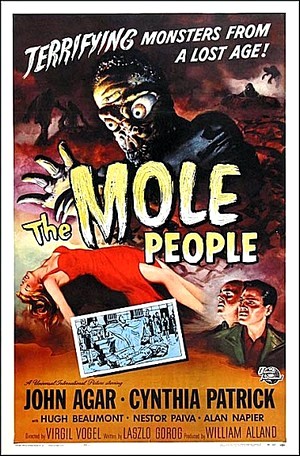
The Mole People (1956)
Starring John Agar, Hugh Beaumont, Nestor Paiva, Cynthia Patrick & Alan Napier
Written by László Görög
Directed by Virgil W. Vogel
Produced by William Alland
|
For thousands of years, humanity has wondered what lay beneath our feet. Multiple religions have located their respective Hells in fiery chasms beneath the earth, while other suggestions have included global subterranean oceans, pockets of fire (which occasionally are channeled to the surface through volcanoes) or simply solid dirt. In 1691, Sir Edmund Halley (he of Comet-naming fame) suggested that the Earth was hollow; that inside it were multiple spheres, each rotating on their own axis, and thus responsible for the magnetic variations that plagued maritime navigation. He also suggested that these interior globes might be inhabited, though he declined to speculate on what these underground neighbors might be like.
Halley's concentric spheres hypothesis marked the first truly scientific attempt to understand what was going on beneath our feet; it also marked the beginning of a truly remarkable trend in adventurous science, pulp fiction, conspiracy theories, and alternative religions: The Hollow Earth. Edgar Rice Burroughs and Jules Verne populated it with dinosaurs, Richard Shaver with sadistic degenerate aliens. According to some "sources," the Nazis established a stronghold there at the end of the War, and this last bastion of the Third Reich is plotting another attempt at world domination to this day.
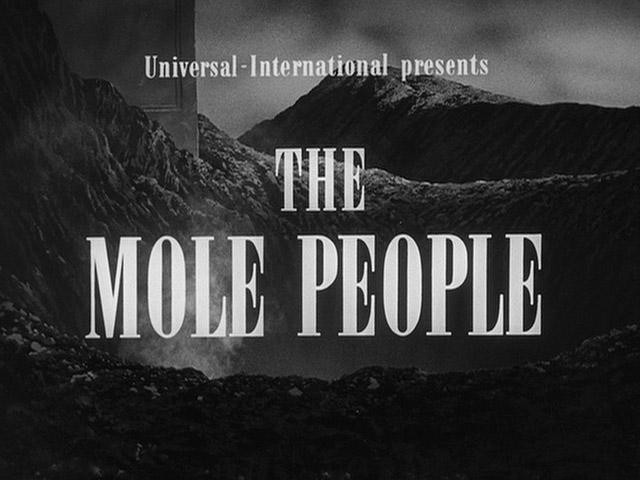
It would be too space-consuming to talk in detail about the Hollow Earth here, though it does segue nicely to the film in question: Universal-International's highly-underrated 1956 creature-feature, The Mole People.
SYNOPSIS
The film opens with Dr. Frank Baxter, Professor of English at the University of Southern California. With a set of diagrams and a cutaway globe, Baxter gives the audience a brief lesson in various scientific theories regarding the possibility that the Earth is hollow and habitable within; while the ensuing story is fiction, he explains, it just might contain a kernel of truth.
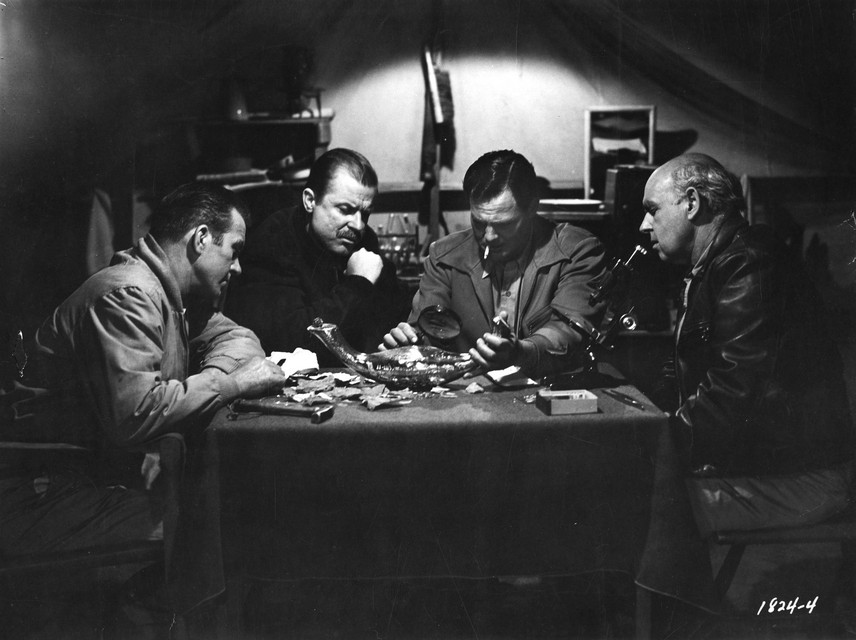
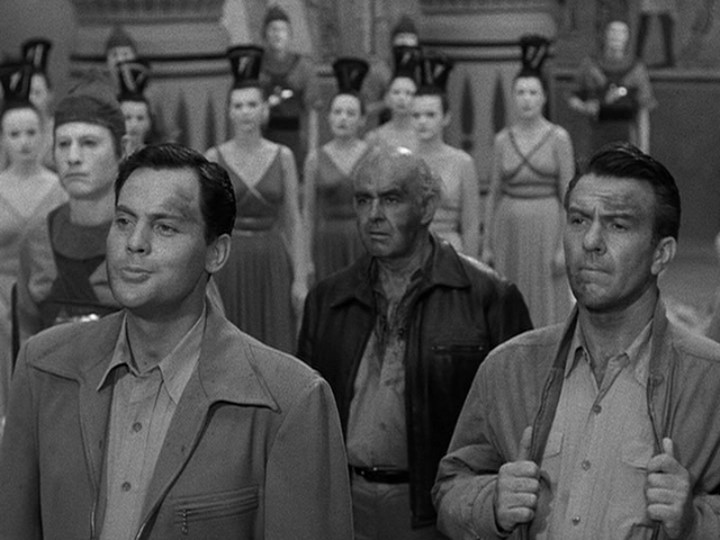
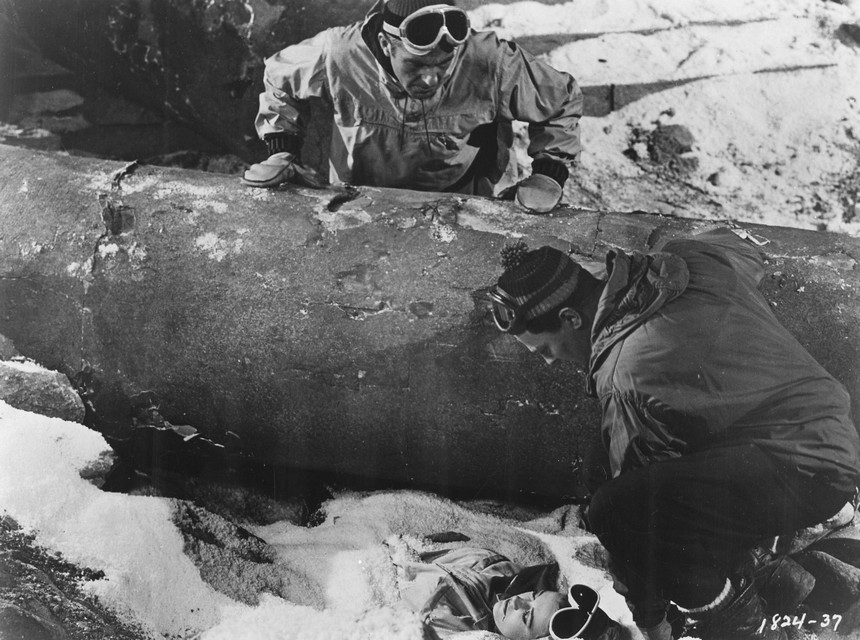
Once this prologue concludes, we are treated to the story proper. Dr. Roger Bentley (John Agar), Dr. Etienne LaFarge (Nestor Paiva) and Dr. Jud Bellamin (Hugh Beaumont, best known as Ward Cleaver from Leave it to Beaver) are leading an archaeological expedition in central Asia. They discover a stone tablet covered in Sumerian cuneiform writing; translating, they find the incredible story of King Sharu, whose dynasty was supposedly washed away by a cataclysmic flood. Sharu's people had instead found refuge on a tall mountain, one not far from their dig site.
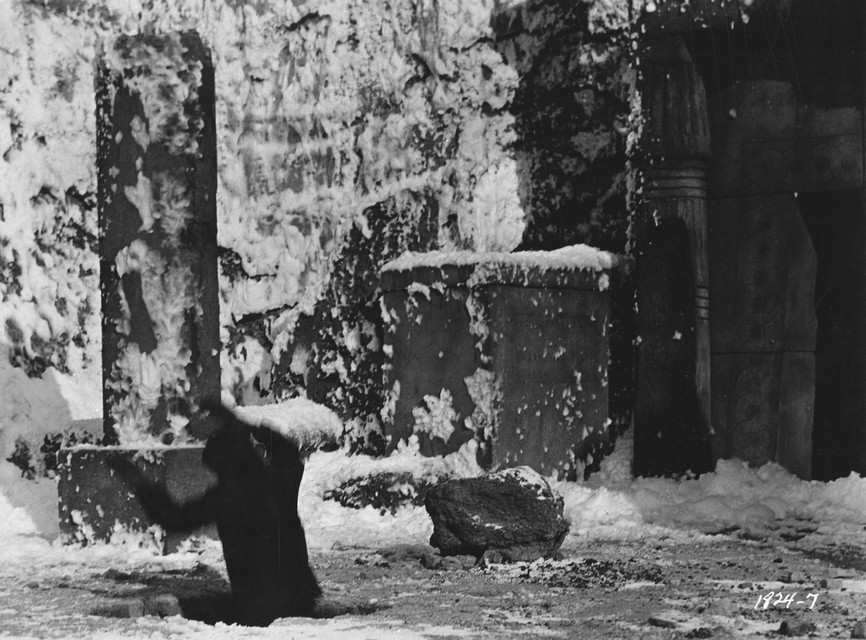
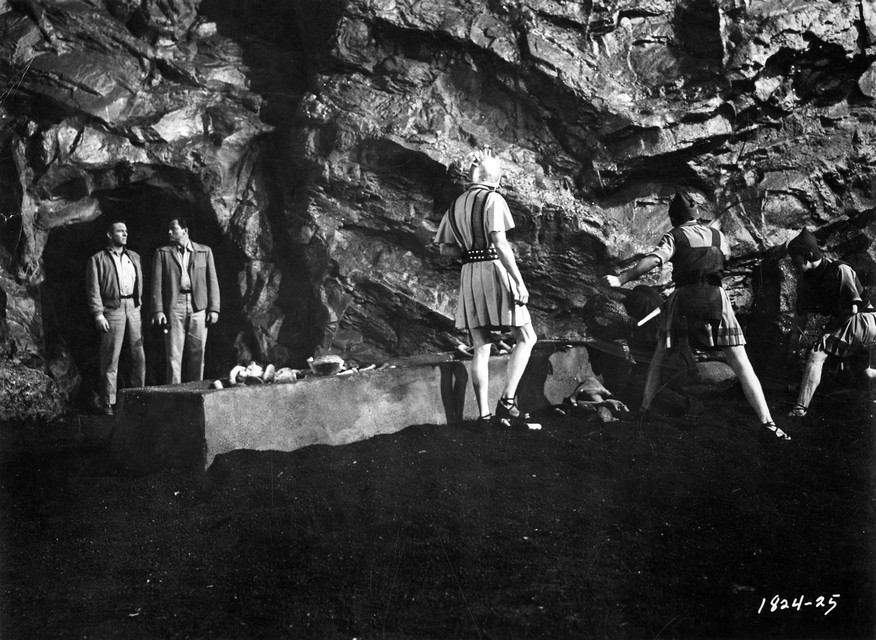
Climbing the mountain, they discover the ruined remains of a Sumerian temple; however, the city that should have surrounded the temple is nowhere to be found. The men decide to descend into a series of caverns under the temple in search of more artifacts.
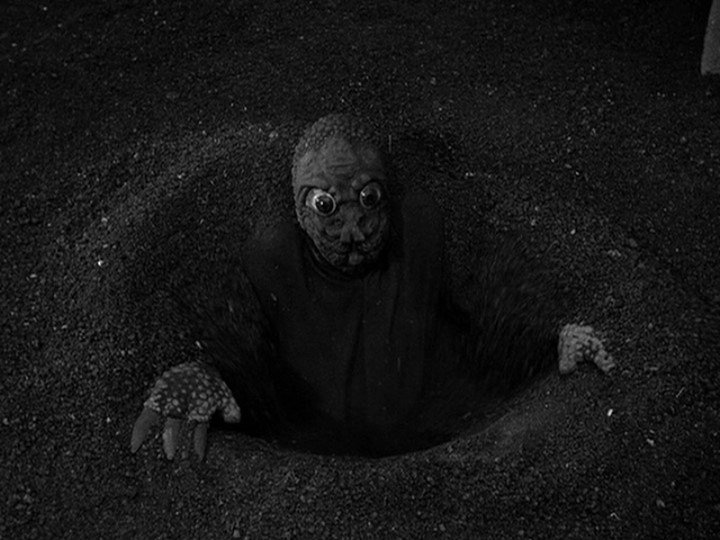
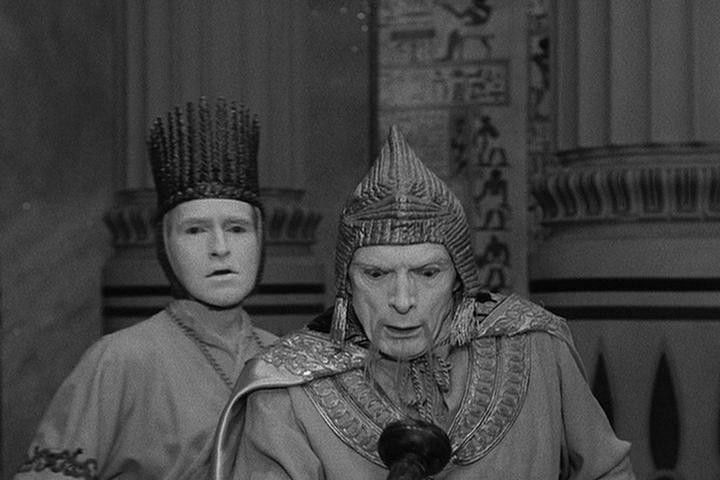
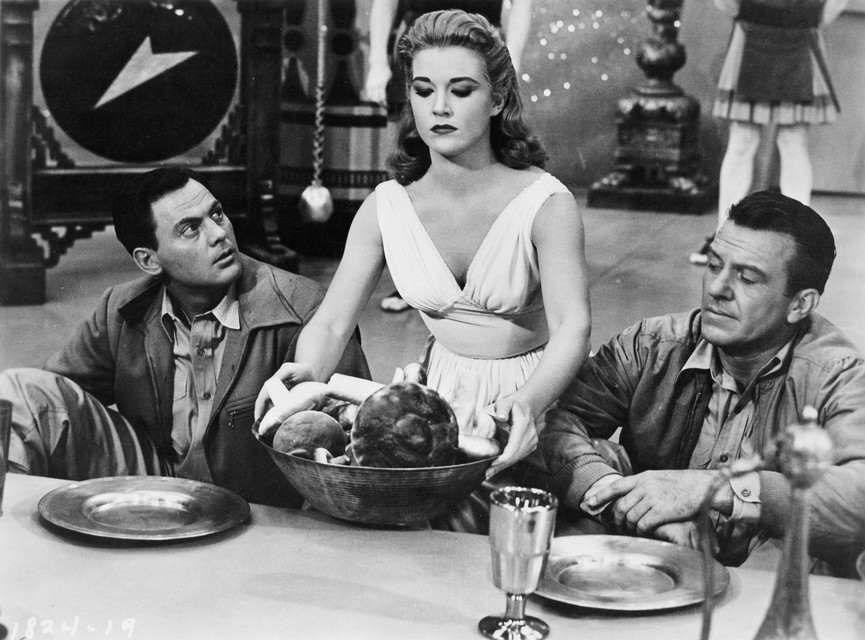
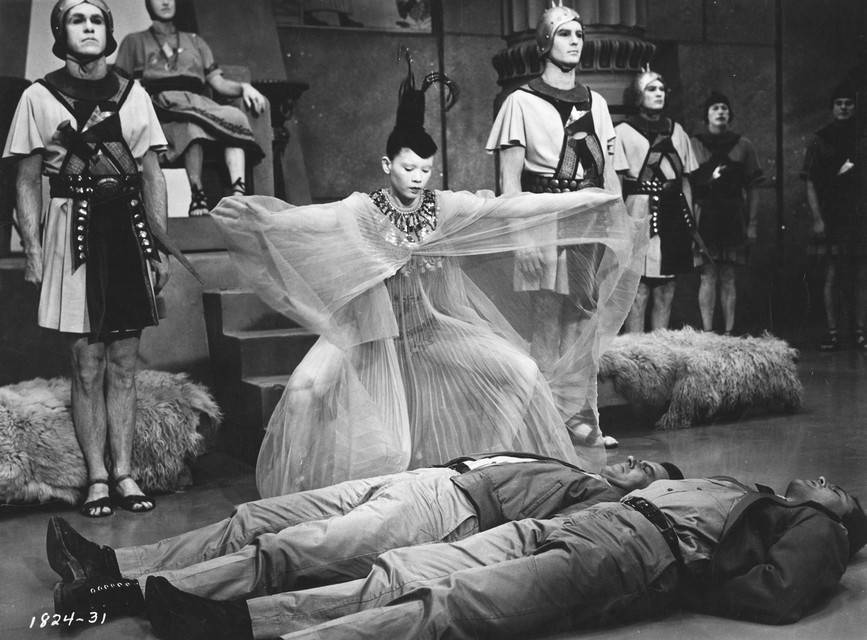
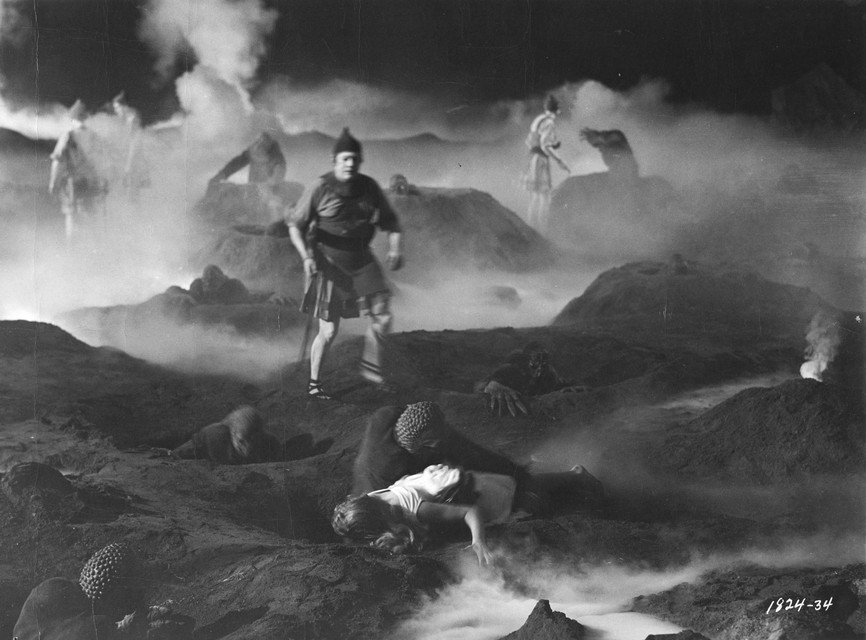
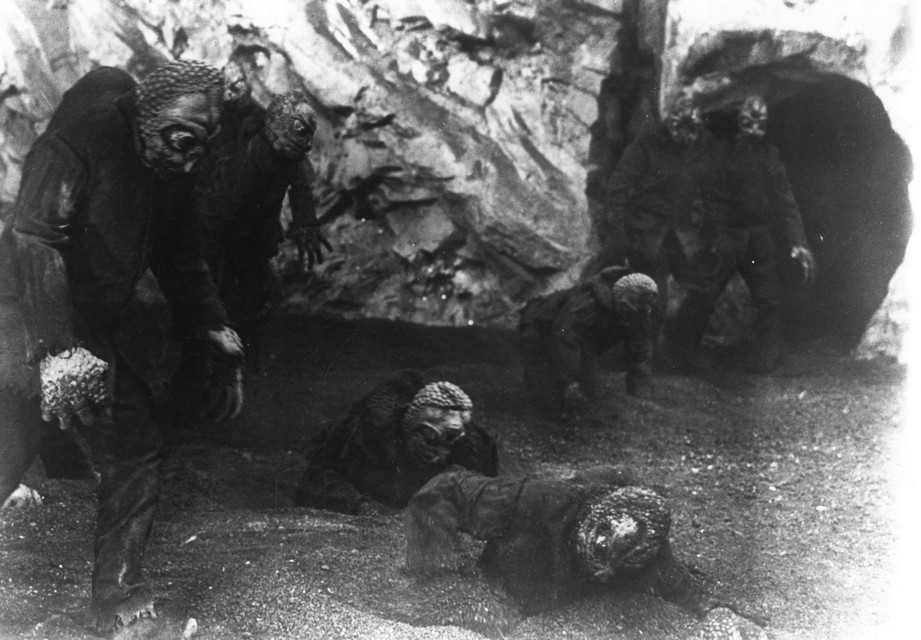
They find significantly more than just artifacts, however. They discover the survival of Sharu's refugees, degenerated into a race of sickly albinos, lorded over by the imperious High Priest Elinor (Alan Napier, best known as Alfred Pennyworth on TV's Batman). Cruel and decadent, these subterranean Sumerians rely on a race of bulging-eyed, claw-fingered brutes - the titular Mole People - as slave labor, harvesting the mushrooms their precarious civilization survives on.
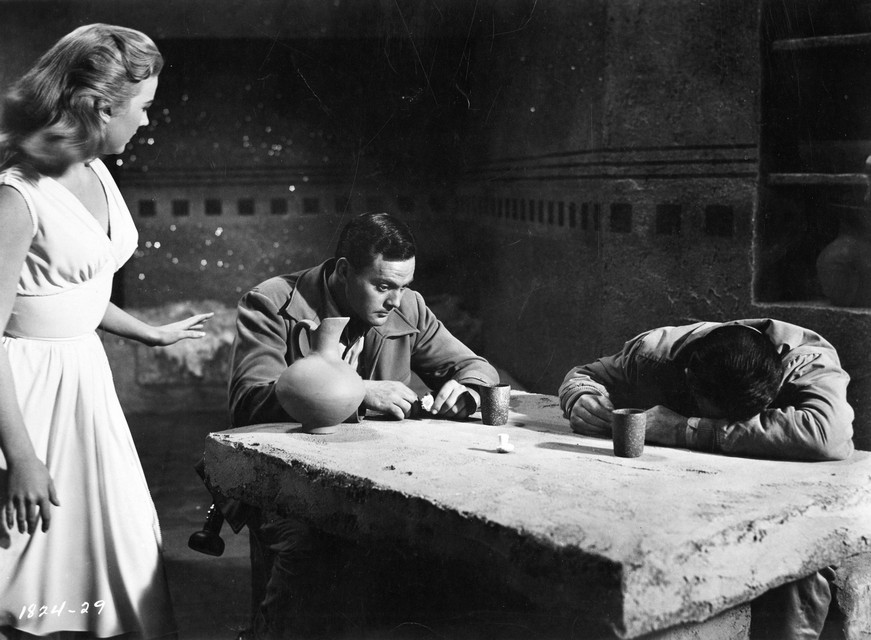
LaFarge dies during an initial struggle against a Mole Person, his body hidden in a disused tunnel. Bentley and Bellamin are revered by the Sumerians as emissaries of the goddess Ishtar, as they carry her "Sacred Fire" with them (i.e., the bright light of their flashlights), but their 20th century notions of liberty, equality, justice and mercy bring them into conflict with Elinor, who plots to kill them and take the Sacred Fire for his own use.
ANALYSIS
While at first glance a kitschy little sci-fi monster movie, The Mole People is, on further study, surprisingly sophisticated, exploring themes of racism and the continued struggle between faith and reason.
The Civil Rights Movement began a year before The Mole People was released, and was a clear influence on the tone of the film. The albino Sumerians, as pale as human flesh can be, enslave not only the dark-skinned Mole People but atavistic, non-albino members of their own race as well, living a life of leisure while the darker slaves labor to support them. Bentley falls in love with Adal (Cynthia Patrick; listed as "Adad" in the credits), an atavistic slave girl after she is given to him; she is as stunned as the rest of her culture when he refuses her as a slave, and instead treats her as a free woman and as an equal. When he urges compassion and fair treatment for the Mole People as well, it proves too much for the Sumerians to handle, and Elinor sentences him to be sacrificed for his crimes.
In a somewhat ironic twist of fate, the original script for The Mole People featured Adal escaping to the surface world with Bentley and living happily ever after. Studio executives, uncomfortable with the implied interracial relationship between the WASPy Bentley and the Sumerian Adal, urged that this be changed, and in the final product, Adal is killed by a falling column as an earthquake strikes during their escape.
Similarly interesting is the theme of Reason (i.e., science) versus Faith (or religion). Bentley and Bellamin are a pair of cavalier scientists, convinced that scientific progress is what is necessary to improve the human condition. In addition to a pair of flashlights, they bring enlightened notions of democracy, compassion, and justice. This puts them completely at odds with the slave-owning, brutally-violent and distinctly theocratic Sumerians. While the Sumerians are physically in darkness, living in the bowels of the Earth, they are also morally in darkness; clinging to their ancestral religion has made them cruel, merciless and corrupt. Bentley and Bellamin, representing secular humanist thought, cause the collapse of the Sumerian civilization by their very presence.
The Mole People, one of the least-known of Universal's family of monsters, is perhaps also one of the most criminally-underrated. A strong and imaginative story with well-rounded and dedicated actors, if any weakness can be found it's in the budget; the sets are recycled from Abbott and Costello Meet the Mummy (and thus feature Egyptian art instead of Sumerian), and the numerous Mole People are represented by immobile rubber masks and hands, and rough-sewn tunics and trousers as opposed to the more detailed monster effects of pretty much every other Universal creature feature (though to be fair, there are 20 times as many Mole People as there were Frankenstein's Monsters, vampires, or Metaluna Mutants in any of the other Universal features).
All in all, I'd say The Mole People is a worthwhile watch; maybe not a must-see unless you're a completist for this sort of thing as I am, but still a pleasant way to spend an evening, and most assuredly a piece of classic camp.
|
 bill
bill