|
|
|
|
|
|
|
|
|
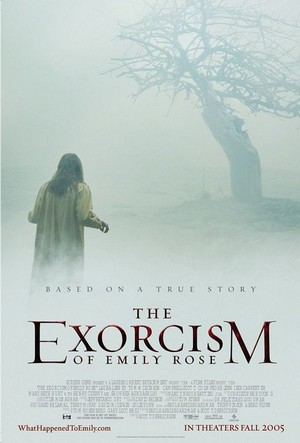
The Exorcism of Emily Rose (2005)
Starring Laura Linney, Tom Wilkinson & Campbell Scott
Directed by Scott Derrickson
Written by Paul Harris Boardman & Scott Derrickson
|
So here's my thought: Its eased up a little bit, but Hollywood loves spewing out movies that are 'Inspired by actual events' or 'Based on a true story' or whatever other catch phrase might put curiosity seekers' butts into seats. They're usually cheap to make, easy to market, and the gimmick tends to work. We all know truth is stranger, and often more frightening, than fiction. No doubt, with the success of little super-low budget films like Paranormal Activity, we'll see them reaping the 'true account' genre again soon enough.
But, if truth really is stranger than fiction, why does Hollywood keep finding the need to change it? A little digging will often uncover the truth behind the stories that the studios have used, and often those real stories are scarier than the film it inspired! The Hollywood machine is always more interested in delivering certain types of market-safe genre tropes, rather than giving a factual account, or a really frightening film.
So, here's the idea, I'm going to start digging through these movies and finding out what's fact and what's crap. You might find more truth than you thought behind a few of your horror faves, or you might find that one is bullshit, who knows.
First off is one that royally pissed me off in the theater, The Exorcism of Emily Rose.
*Bit of a warning here, the whole movie is going to get spoiled by this review. If you want to watch it first and be surprised, then come back here to compare, do so now. Hurry, I'm waiting*

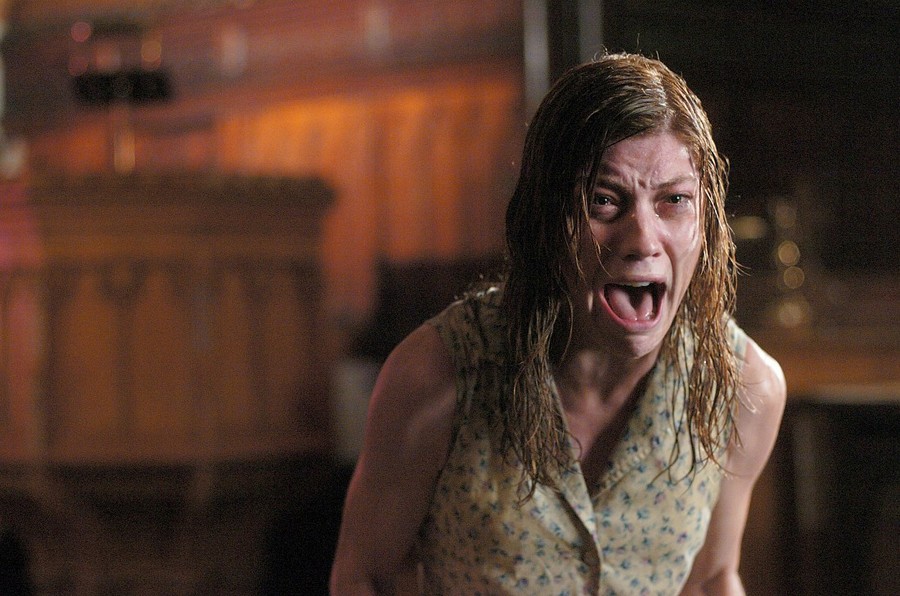
The movie is a combination of court-room drama and horror flick, moving back and forth through time to show the events which instigated the court case. On trail is Father Moore (Tom Wilkinson) for the wrongful death of the titular character. Under his care, the young girl died mysteriously, and the family claims it was the fault of a cadre of demons that had possessed her. The court tries to decide if there is any merit to the family's claim, or if the girl died of neglect, or even murder.
Father Moore is defended by a young lawyer who is unsatisfied with her career progression, and hopes to gain partner status through her role in this attention-getting case. The two of them try to tell Emily's story, and use various 'experts' to prove to the court that possession is a real possibility.
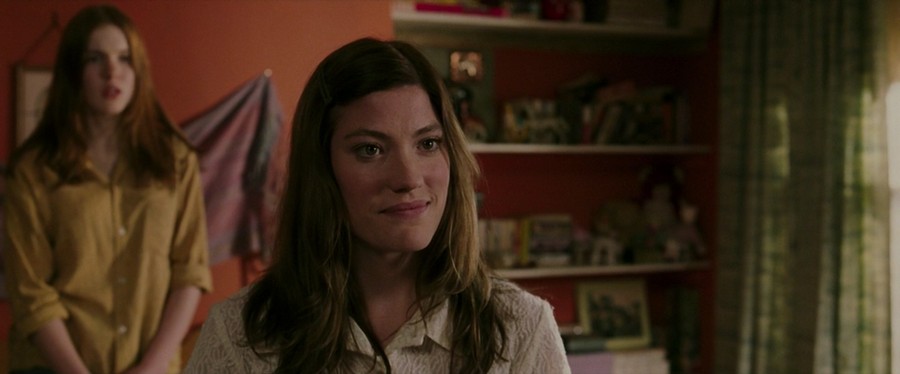
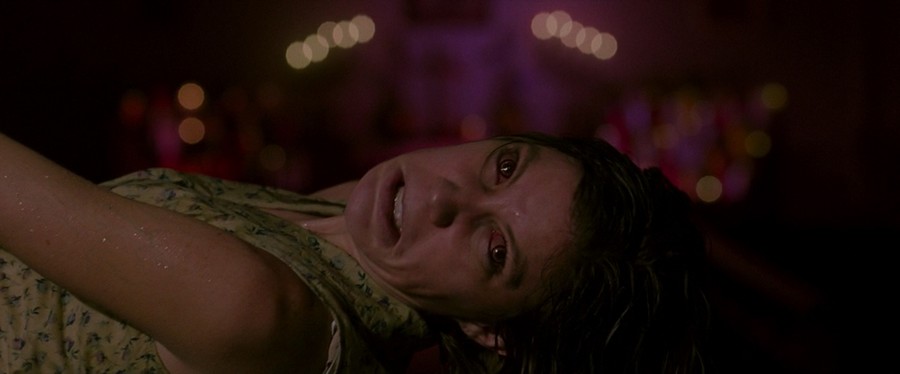
Via flashback, we learn that Emily's trouble began one night in her dorm room, where her clock stops at 3:00 AM (because that is the devil's time, because he thinks it mocks the holy trinity. Because, ya know, 3... isn't that some shit writing right there?) anyway, Emily (played by Dexter's Jennifer Carpenter) smells burning, suffers seizures, and feels as though a great weight is pressing on her and attacking her. Seeking help for the strange events, Emily is diagnosed as an epileptic and a schizophrenic, and given meds.
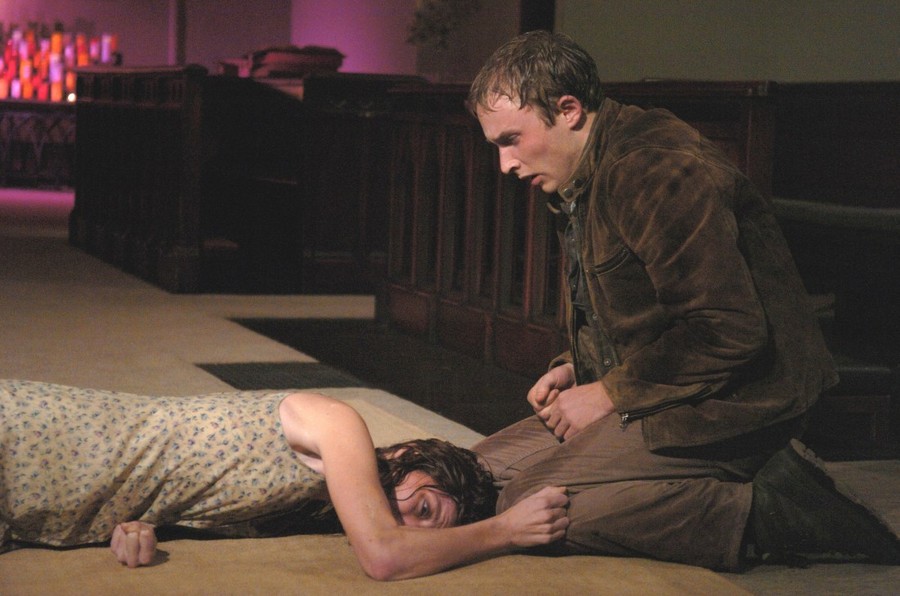
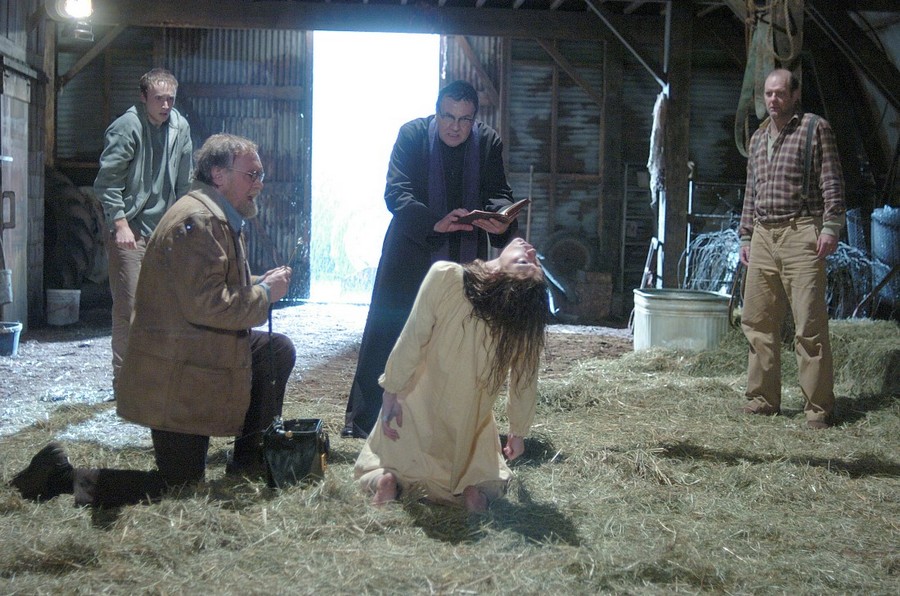
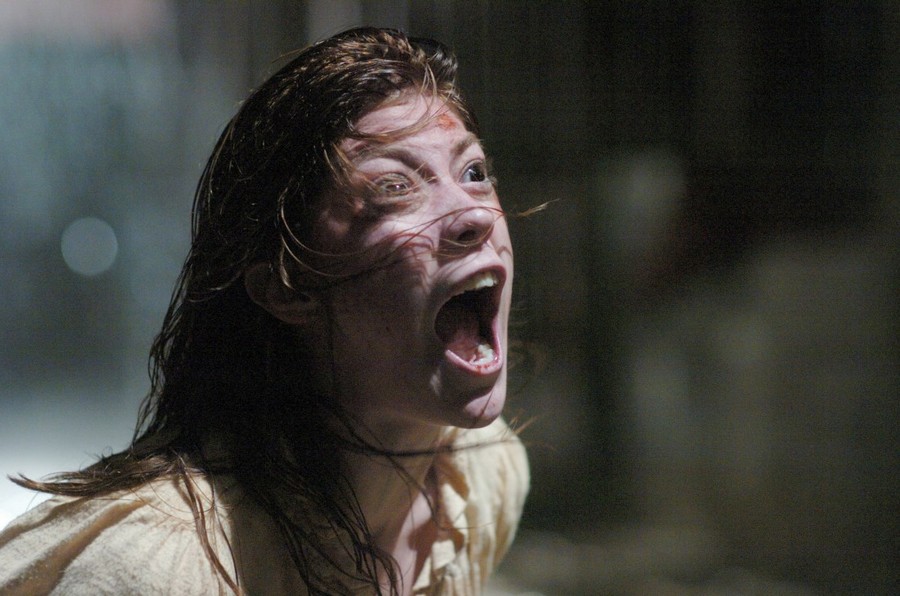
Events continue, and Emily claims to get worse. She goes back to her family, all Catholic to the extreme, who believe that she is possessed. The Church concurs, and an exorcism is granted. During the course of the church visits and the exorcism, lots of strange stuff happens. Insects appear en masse in her room, wasps nests materialize in winter, mysterious storms and snakes appear. The most interesting evidence comes from a doctor who sees Emily at the family home, and concurs with them that the girl's condition is beyond science and she is possessed. Conveniently, this doctor is subsequently killed. Also, Emily is recorded speaking in many languages, sometimes in two voices at once; the demons inside of her speak together, claiming to be Belial and Lucifer. (because, you know, Satan didn't have anything better to do than attack a young girl up in Bum-fuck nowhere).
After many attempted exorcisms fail, Emily finally dies. Before she passes, she writes a letter, which is read to the church at the trial. Emily claims to have been visited in a dream by the Virgin Mary, who claims that Emily's ordeal is meant to happen, that it might prove to the world the existence of God. Mary blesses Emily with stigmata, and then vanishes in a puff of smoke.
The court, so moved by Emily's account of Mary and the purpose of her plight, declares the Father guilty, but releases him with 'time served' as his only sentence. Emily is a saint in Heaven, the Father gets away, and the church now believes in God.
Mission accomplished Emily. Kudos. Sorry about the whole demon mind rape. After that, the defense attorney nonsensically quits her job, seeking... absolution, I guess? Who really knows, it just makes some kind of character arc, I guess.
Still, generally a happy ending. Not a terribly badly done flick, with a couple good freak-out contortion exorcism moments. Very scary if you're a 13 year-old girl, it seems, as they were screaming like mad in the theater.
So, where's it all go wrong?

After discussing this film with others, I have to contend that part of the reason I dislike Emily Rose so much is my complete lack of Christian faith.
Now, I don't that faith is a requirement to enjoy any movie that takes place in a Christian setting. The Exorcist is the prime example, here. I enjoy that film, it got the scares it was after, its wonderfully directed and performed, and it set the bar, still untouched, for exorcisms on film. It doesn't matter that I don't believe in demon possession or in the Catholic rites, I can still accept that the situation would be frightening, and feel empathy for the family that is caught in the middle of the tragedy.
Because of the actual case, and the way it ended, my lack of religion will not let me enjoy it, and in many regards I consider to be irresponsible film making.
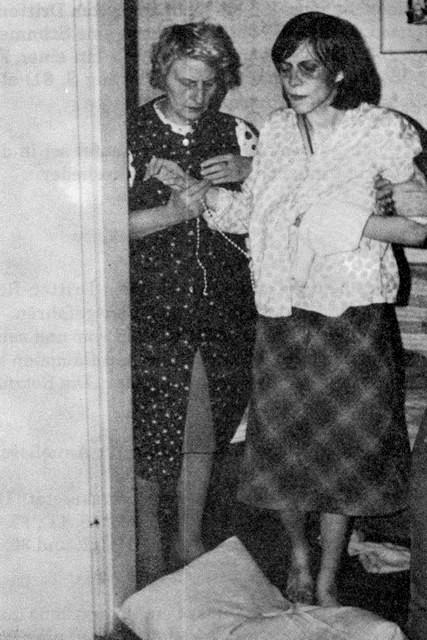
Emily Rose is based on the story of Anneliese Michel, a young Catholic woman from Germany, who died at the age of 23. In 1969, Anneliese began to show signs of Epilepsy, a condition doctors later confirmed. She was given medicine for the illness, but was never able to overcome its symptoms, and continued to suffer from seizures. Emily's condition worsened over time in different ways. She began to hear voices, see strange shapes and faces around her, and fell into suicidal depression.
It is believed at this point, as was suggested by some doctors of the time, that Anneliese was schizophrenic. In fact, the epilepsy medicine she was on at the time would have worsened this condition.
At a church camp in 1974, Anneliese was in the company of a friend who noticed that the girl stank and would not walk near a certain image of Christ. Combining this with the seizures, the woman turned Anneliese over to a nearby exorcist, who said she was indeed possessed. Her family, at this point tired of the lack of curative properties of her medicine, agreed to forego conventional medicine, and seek an exorcism. Such a procedure was granted by the Bishop.
Six months later, Anneliese would be dead.
The exorcism rites were performed by a pair of priests, who, over a course of six months performed not a handful of exorcisms as the film shows, but 67 exorcisms, some of them over four hours in length. That is one stubborn demon.
During the course of the exorcisms, Anneliese's condition worsened. She would regularly strip naked, urinate on the floor, and then lap it up. She ate insects. She would claim to be famous killers, such as Hitler or Nero, and spew obscenities at those around her. Ultimately, Anneliese refused to eat, and sent away all doctors who tried to see her. Her family chose not to challenge her lucidity, and to not try to force her to eat, or find medical alternatives to nutrition.
When the police came for Anneliese's body, she weighed only 68 pounds. She had officially died of malnutrition. All of the ligaments in her knees were ruptured from being forced to genuflect (really forceful kneeling) hundreds upon hundreds of times over the course of her exorcisms. When she could no longer do it on her own, her parents moved her body for her, no doubt causing painful aggravation to her wounds.
Ultimately, German courts found Anneliese's parents and two exorcists guilty of manslaughter, and sentenced them each to six months in prison, and three years' probation. The sentence was lenient due to the girl's requests for much of the pain that was inflicted upon her (believing it to be atonement for the sins of the world), and the sensitive nature of the issue, not wanting to make a religious statement at the time.
So, it sounds pretty terrible to me. And the reason I hate this film so much is that it seems to condone what is essentially the murder of a mentally unstable young girl. While the filmmakers claim to have tried to stay neutral while making the film, it is undeniable that by the end of the movie, their cause is to show you that supernatural events did occur, and that Emily's family was justified in letting her die, as it was a step towards her martyrdom.
And, you know, had anything even remotely resembling any of the supernatural evidence in the film had occurred, I might side with them, but in real life, there was no magic bug-swarm, there was no speaking of tongues (all of her exorcisms were recorded, you can download them. Creepy, but nothing supernatural), no winter wasps, no flying beds or projectile vomit... nothing. Not even a letter claiming the girl might have dreamed of the Virgin Mary.
Nope, all you have is a girl who had epilepsy, and some not-job at a bible camp (and I do mean nutjob. When interviewed, she sprayed holy-water on the microphone, claiming that Satan lived in the radio) said she was possessed. So, the family goes along with it, and spends six months torturing their daughter till she starves to death. And the worst part is, Anneliese never had a chance. As a schizophrenic, her being exposed to exorcism rites would serve to increase the power of her hallucinations, eventually making the 'possession' a reality.
So, yeah, sorry filmmakers, I can't say I thought this was a good idea. For your next film, can you a story based on Son of Sam, and maybe tell it from the viewpoint that the people he killed really WERE possessed by demons, and so he might have been justified in killing them? I'm sure his victims' families would love that. I mean, shit, you can't PROVE religious stuff isn't true, right?
Oh, did I mention that the Church in the area decided that Anneliese wasn't good enough to be buried with normal people since she had been 'touched by the devil'? (answer, no I hadn't) Her body was buried in a separate plot full of suicides and illegitimate children. Nice.

Requiem (2009). German. Also based on Anneliese. Gives a more balanced view in the film between religious possibility and insanity. Requiem isn't really a horror film, more of a standard drama. It tries to shy away from exorcism scenes, and instead focuses on the impact a severe mental illness can have on a family, and the chain of events that can lead to a family trying to help their little girl, and ultimately making the wrong choice and killing her. Unlike Emily Rose, this film acknowledges that medical science, and ultimately, the Catholic Church have both announced that there was never a possession.
The movie has no scares, but a lot of humanity, and is a VERY different take on an exorcism story. Not too shabby.
Alright, that's my probably-more-angry-than-it-should-be intro piece. Back with more fact-finding next month. And so you know, I do requests! Do you want to know about other 'true stories'? Lets' hear 'em!
|

















 dustin