|
|
|
|
|
|
|
|
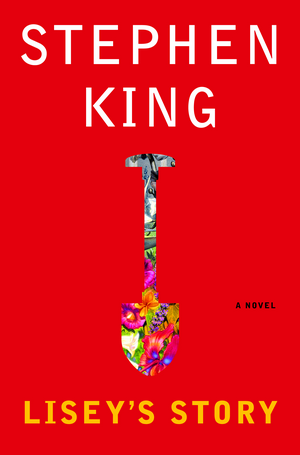
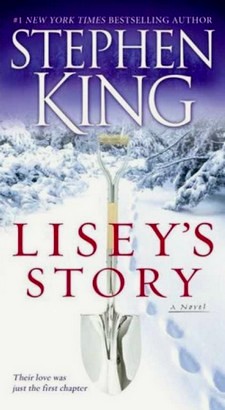
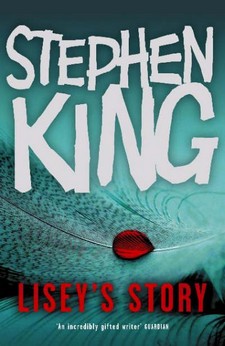
Lisey's Story (2006)
Written by Stephen King (Scribner Books)
|

It is redundant to say that Stephen King is a master in the genre of horror writing. He, along with Lovecraft, and Poe to name a few, have perfected the art of the monster horror story, the kind that swell to an almost enormous proportion of terror, and a majesty of plot that can transcend time and place. I have read his larger creations, The Shining, Insomnia, and It, and I relished every creepy, scare the crap out of you surprises. King has gone through several reinventions of himself over the years, some by personal choice, others by circumstances including his near death experience car accident. Somehow he has always managed to keep writing, to keep, as the character in Lisey's story frequently says, SOWISA (Strap On When It Seems Appropriate).
Is Lisey's Story full of the kind of blood and boiling terror such as The Stand or It? Definitely not. Does it grip you, and get under your skin in a way that lingers like a fading scream? Absolutely. Reading King in his later years, one can see that he has gone further into the fundamental character creation. Anyone who has read King knows that, while he brings the element of supernatural to almost every one of his stories, he is a firm believer that we create our own "boogeymen" from our addictions, our own psychosis. It's not that he doesn't believe that something else is out there, he does, but the doorway through which those darker terrors travel through is opened by human vanity. This novel is a wondrous example of how King makes you taste his characters, and breathe through their skin to experience them from the inside out.
The key to surviving is not in fighting with weapons of physical caliber but to fight with what lies within us. This is not to say that King is offering therapy classes or even lecturing, he just has an incredible insight into humans and what makes us work. In this novel, he has honed his character development to such a fine pitch that it's almost impossible not to be drawn in completely. Yes, there is horror here, a slow creeping dread that catches at the senses like the finest edge of a razor sharp claw. But, this story is of human frailty and strength, survival and loss, the choices we make and those that make us. In Liseys's Story, a wife must confront the truth of her husband's madness and the blessed curse he shared with her while battling an evil as old and timeless as age itself. She faces a dilemma of soul vs. mind leading to a dance with the dead, who linger as more than thoughts, but as less than the living.
Lisey is the widowed wife of a successful writer who discovers that there was so much to her husband's creative side that she didn't know about. Or did she? As she navigates the tumultuous and often treacherous waters of her grief she begins to recognize that there was more she shared with her husband than she is willing to admit. Scott, her husband, is a man who came from a horrific and abusive childhood to emerge as a writer of unparalleled ability in the world of literal horror and fiction. There is thinly disguised darkness in him, a shift between this world and another that has granted him the freedom to escape from the pain and madness that lurked behind his public personae. Lisey found in Scott a place to escape from the chaotic disorder that was her own life, a family that has its own brand of madness. From the very beginning of their life together when Scott reveals the dark family trait that will never allow him to indulge in bringing any more children into its manic grip; they are bound together in a fate that is as primordial as it is passionate. Lisey's pain over his loss stains the book as vividly as blood on a wooden floor but that rapidly becomes the least of her troubles as a human demon begins to stalk her. She will fight to recover the connection to her husband that she feared lost forever, even as she defends herself from a man determined to shred her skin like paper. In order for her to fight, she must find those parts of her self that she has forgotten exist, but her husband will not let her forget or give up. His voice, always present, nudges, cajoles, and compels her to try harder, keep going and get the job done.
In the end, her husbands secret, a place called "Boo'ya", as terrifying as it is inordinately beautiful, will provide her the means necessary to eliminate this threat to her life. Her sister's mental illness, once a source of pain, becomes another link to her husband and his love for her. The pacing of this novel is never leisurely as much as it is measured. Lisey's progression from her initial acceptance that her memories of her husband have been censured, by her own fear, is one of intensity, sorrow and a silent terror. For if she accepts what she knows innately, to be the full truth of her husbands creative gifts and their love, she must accept all the good and the bad to have the whole of her memory.
There are demons in life, imps of the mind that tease and torture us with half-truths and doubts about who we are with our mates and who we are when they are gone. But there are other things to fear, like the places we can go with our hearts when fear is stronger than love, and those we go with our minds when they are fractured from pain and suffering. Human terrors, even two-legged demons with rabid egotism, cannot match the frightening power that such places hold and it is this that King explores so lushly and succinctly in this novel. On a side note, those who know anything of Stephen King and his wife, Tabitha, will clearly see the close parallel to them in this tale. It is in its own way a tribute to her and the love they share as the couple as well as perhaps their own journey they have taken so far along the road of married life.
I hadn't read King in years, probably since Insomnia and It and I wasn't sure what to expect from his later works. I am definitely in the minority of those who haven't read The Stand. I just couldn't get past the first forty pages of graphic description of blood, snot and tissue that kept leaking off of everyone. That was how I kept remembering King, as someone who could never seem to keep the word count down to a less self-indulgent gore fest. This story, amongst others like From A Buick 8, has re-introduced me to an author I'd forgotten I loved. Reading a Stephen King book is like going to a great party where you meet the most interesting characters, get completely immersed in their life stories and then before you know it, the hour has struck, and you are ushered to the door. It's time to go home. You reluctantly depart, not without many last lingering glances and a profound sense of loss for what you will be missing.
|

 karyne