I'm a bookworm and I'm damn proud of it. My 'Top Three List' of book series I've read are The Golden Compass Trilogy by the controversial Phillip Pullman, The Dark Tower Series by writer/icon Stephen King, and at the top of my list, The Dune Series by father and son writers Frank Herbert and Brian Herbert. That's just the top three list; there's been a ton of stand alone books and other series, all in fantasy, sci-fi, drama and horror.
One trilogy I read was titled the Nulapeiron Sequence, an amazing double telling of two stories. The main story throughout the whole series revolves around Tom, a character who we follow from youth to adulthood as he faces several trials and triumphs, fighting evils threatening his world (some of which he caused). The other story is the formation of the legendary Pilots, how it started, what events would shape them, and what role they would play in Tom's life.
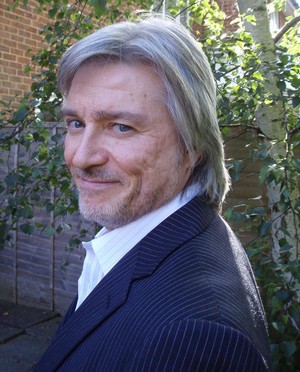
This series was the child of British author John Meaney, who has written a few other books as well and has more on the horizon. As a fan, I was hoping he would agree to an interview, and lo and behold, he did! So, let's get to know the creator of these imaginative works.
 Drew: When did you first have an interest in literature?
John: In my mind's eye, right now – appearing to float in front of me – I can see a picture of a boy in a striped shirt hiding behind wooden packing crates, while in the background stands a rocket ship, its door open, a ramp linking it to the ground. Perhaps the details don't match what I originally saw, but I know for sure this is from the first library book I ever borrowed, on my fifth birthday. (The boy stowed away and traveled to the moon.)
Psychologists reckon we gain a sense of self (when we recognize a reflection in a mirror as ourselves) at the same time we become capable of telling stories, which is around 18 months or two years old. For sure, I can't remember a time when I didn't love immersing myself in books. What stands out for me are the juvenile novels (as they used to be called) of Heinlein and of Andre Norton. I'm not entirely sure when I started reading them, but I'm guessing eight years old. What can I say? They set my brain on fire!
Drew: When did you finally make the steps to become an author?
John: A good question. Harlan Ellison says that an unpublished writer is still a writer, and I agree with him. So keep at it, those of you who have that ambition!
I wrote stories when I was eleven or twelve. In my early twenties I wrote an unpublished novel and spent a long time writing occasional short stories. Really, I didn't think I had enough experience of the world to create realistic characters, and they're necessary for the kind of fiction I want to write. It took the imminent approach of my thirty-fourth birthday to make me realize it was time to get serious.
The first story I wrote after that decision was called Spring Rain, and it was my first sale, although it took a year to get it published.
Drew: Who were your inspirations and heroes for literature?
John: Heinlein and Norton when very young, then A.E. van Vogt in my early teens, and later Roger Zelazny, who was the first SF writer I admired for his use of language (instead of just amazing ideas and perspectives). For specific books, there were Arthur Clarke (The City and the Stars above all) and Frank Herbert's Dune.
Then, in person, I was privileged to meet Anne McCaffrey at the very first SF convention I attended. She's terrific, and so charismatic.
Drew: What was your favorite genre of reading?
John: Always SF. Nothing else competes. But I read mainstream literature and mysteries, too.
Drew: Some of your books have had...interesting titles. How important do you think the name is to a book?
John: I'm really not sure! My first book went through several title changes. I think it started off as Summer Storm, Winter Flower. Then it became Twisted Skein. Finally, I called it To Hold Infinity.
The reaction of my then-agent in New York was: "The title might be okay. I'm not very good with titles." Meanwhile, my UK editor said: "Blake is always a good source for titles, isn't he?"
So if people don't get the allusion, does the title have the same resonance for them?
But yeah, I think the title is important. The goal is to make it both memorable and intriguing.
Drew: Did you ever think you'd be where you are now?
John: Er, where am I? I dreamed for so long about just writing... I dreamed about it, but I'm still only just beginning to realize this is my real career as well as my dream. Always, it was the process of writing that I was thinking of, and the books. Not myself, you see.
My wife Yvonne noticed something a long time ago, attending conventions. People who say "I want to be a writer" rarely become one. Those who say "I write" are the ones who do get published... which is only the beginning.
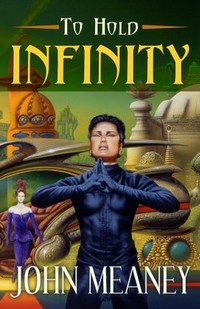

Drew: This is your first book ever produced, and the first dip into the Nulapeiron universe. How did this story come up?
John: I had introduced the Pilots in a couple of short stories that were published in Interzone, in the UK. For the rest of it... I stared into space, dreamed up the idea of a psychopath among an elite who are equipped with a kind of electronic telepathy, destroying his victims while sucking parts of their minds into his, and then decided the idea was too simple. That led me to create a greater and greater cast of characters and intrigues, until I realized what I had was too complex to be a short story.
Drew: For the ones who aren't familiar with them, can describe Pilots and the purpose they serve in the story?
John: Ultra-cool dudes, able to navigate the alternative universe of mu-space. (Instead of dropping in 'hyperspace' as a pure literary device, I decided to invest that universe with its own unique physics.) In the first book they're powerful and very mysterious, and part of their purpose is simply to produce a shiver of awe and a sense that there's more going on than is apparent in the main story.
Drew: The Technology is unique in this universe, with smartgels and membranes that are used casually, would you say creating unique and advanced technology for such stories is more or less challenging?
John: That fine writer Jon Courtenay Grimwood said something about me creating throwaway ideas that other writers would use to create entire novels from. For me, this is the high of writing SF: you can use your imagination to reinvent everything. In the future, what will cups and saucers and plates be like? How about buildings? You can change it all! And guess what... that's how reality works, too. The future really will be marvelous.
Drew: How would you describe your feelings about your first ever book release?
John: An immense quiet elation. Standing in bookstores in London with a smile on my face and not saying anything to anybody... amazing.
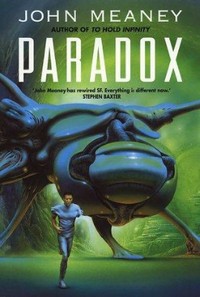

Drew: To Hold Infinity was just a doorway into this grand trilogy, how did you come up with the universe that is Nulapeiron?
John: The psychology of writing is always interesting... I saw in my mind one scene from the book, which was a person climbing up a huge stone sphere floating in the sky. Some world's sky. And intellectually, I was thinking about a particular interpretation of quantum physics that involves influences traveling both forwards and backwards in time (technically, advanced and retarded waves). Although it was only half of the speculative science that I needed, it was enough to make me think of oracles whose neurology worked backwards in time. Everything grew from the tension between those two ideas.
Drew: What inspirations did you have for the creation of Tom Corcorigan, the protagonist and the figure we follow from the first page of Paradox to the last of Resolution.
John: Class distinctions in Britain are complex, still existing in the 21st century, but continuing to diminish, thankfully. Being a second generation immigrant in a working-class environment is just part of the personal history I trailed into the story.
 (Snippets: when my Irish parents lived here first, boarding houses famously bore signs saying: No Irish, No Blacks, No Dogs. And a TV interview with an aristocrat when asked whether the difference between his son and a working class boy was academic qualifications – they mentioned A-levels (like high school diplomas) – the aristo said: "A-levels? Huh, the postman's son has A-levels." He went on to spout nonsense about pure blood, or being born to rule, or something. And my dad was a postman.)
There will always be repressive political structures. And of course, in my books, the revolutionaries are as misguided as those they try to replace... Tom sees this, being in many ways a perennial outsider.
For his personality, I drew on memories of one person I knew at school, who shared Tom's drive to succeed, and someone I knew of from afar in the martial arts world – someone whom I met years after the books came out. You do realize Tom is a bit of a psychopath, though, don't you?
Drew: As one reads through the books, they almost feel as if they're reading two completely different books and stories as Tom sees the creation of the Pilots through a gift, how did you come up with the idea of two different stories at the same time?
John: Do you know what, I think it was from simple fear that Tom's story alone would not be interesting enough. And I knew so much about the Pilots that their story seemed to be compelling and form a kind of skeleton to strengthen the main storyline.
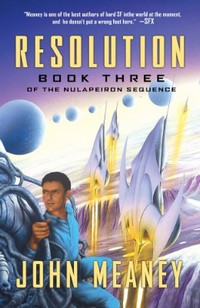 Drew: There's been several book series that'll go down in literature history, Narnia, Lord of the Rings, Dune, and Wizard of Oz; did you ever hope Nulaperion would join that list?
John: Er... Wouldn't that be brilliant!
Drew: Usually an amazing novel(s) will have some unique cover art, especially Sci-fi, who did the unique cover art for your books?
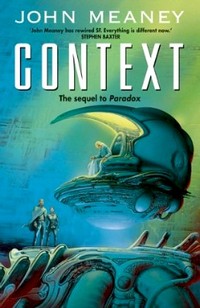
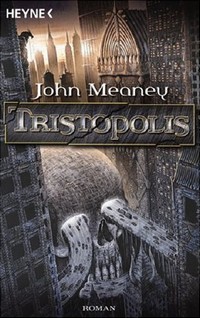
John: The enormously talented Jim Burns did the first four covers, and I actually bought the original paintings of the first two! They're hanging on my lounge wall downstairs right now.
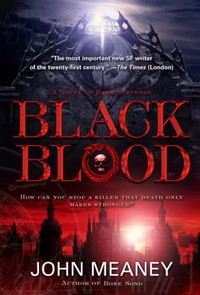
I also like the US covers for Bone Song and Black Blood, mind you.
My big forthcoming trilogy, back in the Pilots universe, starts with a book called Absorption. I'm pleased to say that the UK edition, appearing in February 2010, will feature another Jim Burns cover. It looks terrific.
Drew: What honors have you received for this series?
John: Shortlisted (i.e. finalist) for the British SF Award, and Paradox was Independent Publishers Novel of the Year, in the SF category.
Drew: Will we ever see Tom Corcorigan again, or the unique and amazing world he lives in?
John: I think Tom can rest on his laurels, but I'm not ruling out another adventure. As for the world of Nulapeiron... Well, it's already been mentioned in Absorption. But only a mention. Beyond that... Maybe!
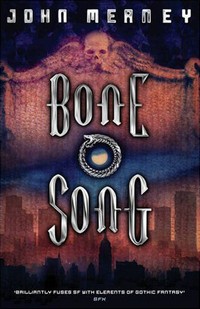

Drew: This duo of books I'm sadly yet to delve into (but so help me I will), how did they come to being?
John: I thought of particular places that seem spooky. And no, I don't believe in ghosts. But there was a particular churchyard I used to walk past that was always chilly at night, and a long time ago I visited Russia and saw the mass graves from the Siege of Leningrad in World War II, and that's a really haunted place.
Then I thought of reactor piles stacked with the bones of the dead, in which waves of necroflux build up to provide energy... and wondered what kind of world would contain such things. And then I had a story!
Drew: These books take the sci-fi setting you were known for and add a unique blend, Gothic horror and a bit of fantasy. Have you always had an interest in Gothic horror?
John: Weirdly, no. I'm a huge admirer of Stephen King, though a latecomer to his work, and yet that's despite his writing horror, rather than because of it.
Drew: I talked about a books cover art above, this one though has a very different look then before (yet still very fitting); who did the artwork for this set of books?
John: Someone I've not met, called Steven Stone. The artwork is always commissioned by the publishers. I liked it enough to use a portion of the art on my website (having checked via my publisher that it would be okay).
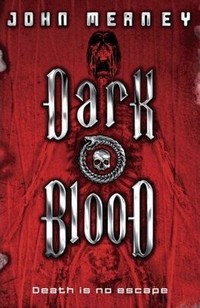 Drew: I noticed from the plot summary that the main character, Lieutenant Donal Riordan, is similar to a figure used many times before in TV and movies, the figure of the lone hard cop. Were there any inspirations for his character?
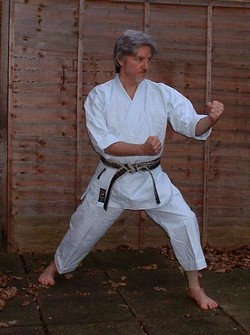
John: I read American mystery novels (much more so than British crime novels, though I am a Brit), and I'm a huge fan of the genre. Then again, in a lifetime of martial arts training, I've met a lot of interesting people.
A few days ago, I spent an afternoon with an undercover cop who'd read Bone Song and said Donal Riordan acted just as a real cop would, and that I'd got the interactions between the working cops just right. Cool!
Drew: Where there any messages or themes you wanted to get across?
John: Not really! Having said that, Black Blood turned into an examination of prejudice and reaction against minorities, in this case against zombies (who are the cool undead in these books, more like vampires in normal urban fantasy).
Drew: At the moment there are only two books in the series, will it ever turn into a trilogy?
John: So, I have to apologize abjectly. I had a two-book deal when I started to write these. Black Blood does wind up the storylines it was supposed to... but then it ends on a bit of a cliffhanger. Which would be alright, but there are no plans for a third book! Not yet... I've too much other stuff happening.
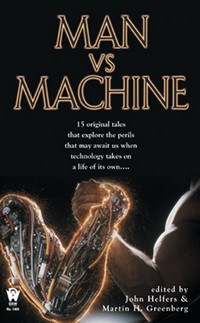

Drew: In between your novels, you've taken time to do short fiction stories for science fiction magazines and such. How do you tell if a story is meant more for a short read or to be a novel?
John: Most of my 'short' fiction tends to be fairly long, at novella length. It's to do with the number of characters, mainly. More than two main characters and it's already getting complex enough to be a novel. But it has to have an interesting world and ideas to go further.
Drew: What is the main magazine(s) that you primarily write for?
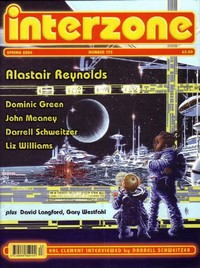
John: In the past I wrote entirely for Interzone. In recent years, I've been too busy to write stories on spec, but when editors of anthologies have asked me to write stories for them, I've usually said yes.
There was a time when I wouldn't have believed that state of affairs to be possible!
Drew: Some have said that a great way to become a writer is to do stories for magazines like you do. Would you agree?
John: It's one way. Many point to the ever-decreasing circulation figures of magazines, but from the writer's viewpoint, that's not the important thing. You can write many short stories, investing little in each; you can write novels, taking a year or two over each, and perhaps get your fifth novel published; or you can spend ten years working on the one book over and over until it's right. These are all good routes, because your goal is to teach yourself to write. It's all about the effort, and simply writing. The learning is in the doing.
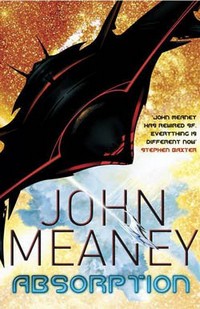

Drew: You've recently announced a brand new trilogy called the Ragnarok trilogy. Can you elaborate on this?
John: From those who've read the first Ragnarok book, the feedback is that it's the best thing I've written. It's more complex, with one main timeline interspersed with four others in the first book, and more to come in subsequent volumes, and stylistically superior. (Can I say here that the best stylist I've come across in recent years is Philip Pullman. Our writing tastes coincide, Drew!)
The climax of Ragnarok takes place a million years after the story's beginning.
There are dark beings moving among Vikings in the 8th century, there are strange things happening as Naziism rises in 20th century Europe... and on the transformed world of Fulgor, where an undercover Pilot family become involved in the rise of what will become a predatory global gestalt mind. But even that is not the true danger facing the galaxy...
Drew: The first book, Absorption, is to be released in 2010 with the follow ups Transmission and Resonance to follow after; do you have a specific time table for the full trilogy?
John: Absorption appears in February. I'm not sure about the other two books, although I will be handing them both in next year. This all applies to UK publication, though with online bookstores these days the country boundaries don't matter so much. Now that I've handed in Absorption here, my agent has submitted it to various US publishers.
Drew: You've recently announced as well that you will be doing books under another name, Thomas Blackthorne, which has been done by authors many times before. Why exactly does one do it under another name?
John: It's always do to with separating certain books from the others. If an author's career is doing well, then it's because of the types of books. (It can also be a tactic for restarting a flagging career.)
 An extreme example is Iain Banks, who alternates SF and mainstream literary novels, and writes as Iain Banks and Iain M. Banks. This is sensible, because the booksellers analyse his sales trends separately for the two categories. That's vital, otherwise – if one group of books sells less than the other – you might get a false downward trend which would become a self-fulfilling prophecy. (If the booksellers think they won't sell as many as before, they'll order fewer of the next title.)
In my case, the new books are near future, set in London in some thirty years time. They're somewhat violent, plus there's a strong element of political satire, which means the books might be misinterpreted in a way that my other books cannot. All good reasons for publishing them separately.
Drew: Under this new title, you have two new books coming out, Edge and Point, can you shed some light on them?
John: Josh Cumberland, the hero, is ex-special forces, at a time when SpecOps is as much to do with software systems as with SAS or Delta Force missions of the present day. Suzanne is a scientifically trained psychotherapist, whose young patient, a rich kid called Richard, runs off and tries to survive among the homeless on the streets of London. When Josh searches for Richard, he finds more at stake than one missing schoolboy.
The background is a Britain on the verge of possible collapse, while the world's climate is also on the brink. And here's the political bit: dueling is legal, citizens with knives get extra voting rights, and a primary entertainment is a form of mixed martial arts (MMA) with knives.
This will be read totally differently depending on the country (and it will be published in the US and the UK). In Britain right now, firearm ownership is illegal, and the notion of carrying a gun ranks somewhere between heroin addiction and pedophilia in most people's minds. It is illegal to carry a knife or any other form of weapon on the street, whether concealed or openly.
Despite that, knife crime is a growing problem, and a knife culture has arisen among the young. And there's a statistic that most people don't know: overall crime falls (at least sometimes) as knife crime increases. You can't not create a political satire from that.
 Drew: Will you continue to work with the sci-fi theme?
John: Always!
Drew: Can we expect more horror, fantasy and other genres as well?
John: Well. If an idea springs to mind, why not? But I've no plans for anything other than SF.
Drew: Some authors have seen their work turned into movies, TV shows and games, you've yet to have your work turned into such. Would you mind it happening someday?
John: There were serious enquiries from two major producers about turning Bone Song into a movie, but neither panned out. I think they realized it would take a big budget and great CGI. (But if they're reading this... you could do Edge and Point really cheaply!)
I would like it to happen, but in a way that would get people reading the books. What I mean by that is, if you look at the HBO series True Blood, that's caused a lot of readers to buy Charlaine Harris's books. Terrific! On the other hand, thriller writer David Morrell wrote First Blood back in the sixties, and when it became the first Rambo movie, the effect it had on his career was negative. (Or rather, the movie sequels, so different from the novel, meant that First Blood was dropped from school classrooms where it had been studied, and from independent bookstores. And he earned little money from the movies directly.)
But yeah, it would be nice.
Drew: Sometimes, authors have united and worked together on books. Will you ever do it and if you could, who would it be?
John: My first instinct is to say no. But I'm more productive these days, and with potentially more time on my hands... I don't know. This is a scary question!
Drew: Any advice you'd like to give any future writers?
John: Read lots. Write lots. Make it a private discipline, just as an athlete trains every day. And just live your life! Because your experiences in the real world are a huge part of what will make your writing unique.
 Just write, write, write.
And finally, as per my usual interviews, I do the random Q&A.
Drew: Favorite drink? Alcoholic or not doesn't matter
John: Coffee. (Ask anyone who knows me.)
Drew: Place you want to visit in the world before you die?
John: Japan. (I love traveling, haven't made it there yet, though I've visited Singapore twice.)
Drew: Favorite genre of music and artist who performs it?
John: I write while listening to movie scores: Hans Zimmer above all. (Also John Powell and Ramin Djawadi.) Otherwise... er, anything from Rimsky-Korsakoff to Led Zeppelin.
Drew: Favorite film genre and film in it?
John: Thrillers/SF. Films I'll rewatch: Heat, Nikita (in French), the Bourne movies, Redbelt, and alright, Star Wars.
Drew: Favorite TV show?
John: Currently Spooks (called MI5 in the States). Over all time, then I'll pick Fireball XL5, for the effect it had on me. (You'll have to google that one, and then you'll realize how old I am!)
Drew: Food you could live off of till you die?
John: Beans on toast.
 Drew: Current religious stance?
John: Atheist.
Drew: Favorite Game consule and game for it?
John: I stay away from games, to the extent that I don't understand the question! They look addictive, and for sure they develop cognitive skills unknown to non-players. But for me its better to do something physical (martial arts) or more informative (read books!).
Drew: If you could do something else besides being a writer, what would it be?
John: I have done other things – as a software engineer and a corporate IT trainer, I've had a great time. And I could teach martial arts professionally. I sort of regret not being a theoretical physicist, having originally studied physics. I'm a trained hypnotist, and I've successfully cured phobias, stuttering and addictions, but not for money.
Drew: And finally, what would you like to say to your fans, new and old?
John: Coffee! Chocolate! Books!
That was John Meaney; Author of some of the most unique books you could ever read. For more information, simply go to www.johnmeaney.com and read his bio, get reviews on his work, read his blog, links and a lot more. You can find his work at most likely your local library or bookstore.
Give it a read, I guarantee you'll be entertained.
|  drew
drew