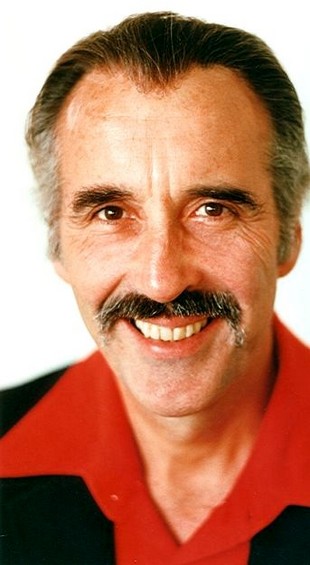
In case you haven’t heard, the 87 year old actor Christopher Lee was knighted at the Queen’s Birthday Honours ceremony back in June. It probably comes as a surprise to many that the old Dracula star wasn’t knighted way back in the 60s – Hammer Films did win itself a Queen’s Award for Industry back then after all. But such is the stigma still attached to our beloved genre that that it’s taken until now – forty years later – for his massive body of work to be officially acknowledged by the British establishment.
While this probably means a lot more to him than it does to anybody else, it is good to see him recognised in such a way – and hey! What better excuse to take a brief tour through the, shall we say, less celebrated works of this fine actor? An actor who was always keen to dabble with even the most out-there of European filmmakers? Well, either that or he just liked to have a lot of free vacations.
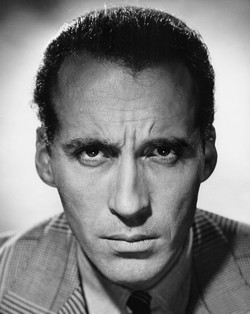 Lee had had small roles, often uncredited, in films from as early as 1948, but it was only with Hammer’s first smash hit excursion into the realms of full-colour gothic horror, The Curse of Frankenstein (1957) that his success story began. With the studio’s follow-up, Horror of Dracula in the following year, he gained the status of a household name and appeared in no less than six sequels - alright I’ll list them: Dracula, Prince of Darkness (1965), Dracula has Risen from the Grave (1968), Taste the Blood of Dracula (1970), Scars of Dracula (1971) Dracula AD1972 (erm, 1972) and The Satanic Rites of Dracula (AKA Count Dracula and his Vampire Brides). Surely this paragraph is a contender for ‘most instances of the word Dracula in one paragraph’ award?
In 1970 he actually played the character three times, in the Hammer film mentioned above, as a cameo in the Jerry Lewis directed comedy One More Time, and in Jess Franco’s El Conde Dracula (Count Dracula). Lee, a huge enthusiast of Bram Stoker’s novel, found Hammer’s almost complete disregard for the source material in favour of the Universal Studios model extremely irksome and wanted to play the character exactly as he is described in the novel. So he went to Jess Franco? Hmm… I’m thinking that you can probably see the flaw in this plan already.
Count Dracula is a very well-meaning attempt to return to the source material, with a moustachioed Count, minus cape, who looks younger as the film goes on, and huge swathes of dialogue taken wholesale from the novel. It starts off well, with some very atmospheric local colour. Unfortunately, Franco must have realised, too late, that if the film had carried on in this way it would have been about four hours long and massively over budget, the result being that the rest of the story is rushed – but somehow moves really slowly at the same time. File under ‘well-meaning failure’.
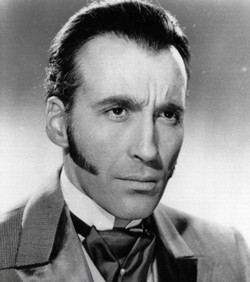 Lee had already worked with Franco on The Castle of Fu Manchu (1969) and Witchfinder General clone The Bloody Judge (1970) and worked with him again on the delirious Eugenie – The Story of Her Journey into Perversion in the same year. One of Franco’s best films, the film is loosely based on the Marquis de Sade’s 1795 novel Philosophy in the Boudoir, and stars Marie Liljedahl as the title character. The story outlines her corruption by a pair of shifty aristos, played by Jack Taylor and Maria Rohm, culminating in Lee turning up as the leader of a depraved de Sade worshipping cult. Lashings of lesbianism, groovy psychedelic jazz, pretentious waffle and, well, lashings, make Eugenie a fine Eurotrash classic –somehow I doubt that ‘Her Majesty’ has ever sat down to watch this one!
As the seventies get properly underway, we find Christopher Lee trying to break free of horror typecasting and landing himself roles in films like the Salkind’s The Three Musketeers (1973) and the James Bond flick The Man with the Golden Gun (both 1974). Aside from perhaps that of Saruman in the Lord of the Rings series(2001-6) his role in the latter as he of the extra-nipple, Scaramanga, is undoubtedly his most famous non-Dracula turn.
This escape didn’t last long, however, as three years after his ‘last ever horror film’ (Lee has said this every time he has made a horror film in the past thirty years), The Wicker Man (1973), he found himself back in the genre with Hammer’s last gasp, To the Devil a Daughter (1976), a frankly piss-poor Exorcist rip-off based on Dennis Wheatley’s novel in name only. The film starred Richard Widmark as a writer trying to protect a very young Natassja Kinski from the machinations of an evil cult of devil worshippers masquerading as ‘The Children of the Lord’, led by Lee, of course, as the formidable ‘Father Raynor’. Believe me, that description makes the film sound a hell of a lot more exciting than it really is.
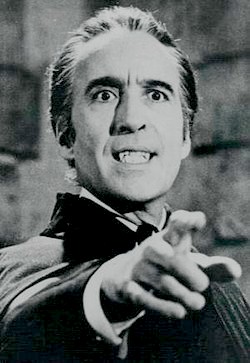 The same year also saw him return as Dracula. Well, sort of. In the reportedly rather unfunny French comedy Dracula père et fils (Dracula & Son, 1976) Lee played ‘The Prince of Darkness’, obviously Dracula, opposite Bernard Menez as his son, a nerdy youth who doesn’t want to be a vampire. Released in America in a butchered, terribly dubbed form in 1979, the film has since languished in utter obscurity. In 1977, whilst Hammer-mate Peter Cushing starred in a film that would change the shape of cinema forever (for better or worse), yes, Star Wars (1977), Lee was in Canada making the low buget Starship Invasions (also 1977), a film that most people forgot by the time they’d reached the cinema lobby. One of the taglines for the movie was ‘Why did they come?’ Why indeed.
Two years later, in the States, Lee was pitted against a comic book legend in the form of Reb Brown (Yor) as Steve Rogers in the Universal TV movie Captain America 2: Death too Soon (1979). In this largely forgotten flick, Lee plays a villainous character called Miguel who plans to release a lethal toxin which causes premature aging if he isn’t given a vast amount of ransom money. Needless to say, Cap Ap puts paid to this scheme – but he never got a series, even after this second pilot. If it’s a few laughs you’re after, seek it out.
A couple of fairly lean years later, Lee played opposite another Great America Hero - Mr Chuck Norris himself in An Eye for an Eye (1981). As ‘Morgan Canfield’, he is the leader of a vicious drug gang, who orders the brutal murders of cop Sean Kane’s (Norris sans ‘tache) partner and, later, his partner’s girlfriend – all of course serving to make Kane very angry and bringing the inevitable martial arts based revenge down on his evil ass. Norris’s acting may be particularly atrocious in this early film but who cares when an action movie is this much lumpen-headed fun?
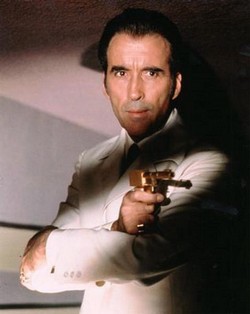 And who could forget Lee’s next brush with a super hero in The Return of Captain Invincible (1983)? Well, almost everyone it seems, and quite rightly so. The dastardly ‘Mister Midnight’ forces the 50s crusader (played by Alan Arkin) out of retirement by holding the country to ransom with a ‘hypno ray’. When the best thing about the film is the songs – that’s right, songs, written by Rocky Horror Show creator Richard O’Brien – you know you’re in trouble.
The film, perhaps unsurprisingly, was a huge flop, so why the hell Lee chose to work with its director, Phillipe Mora, again is anyone’s guess. Howling 2 (or to give it its proper title Howling 2: Stirba-Werewolf Bitch, 1985) is almost unbelievably poor, especially given the superb quality of its Joe Dante directed predecessor. Like most of the films here, it is good for a few laughs, although this is the best one can say about it. Lee does his best, though, as werewolf hunter ‘Stefan Crosscoe’.
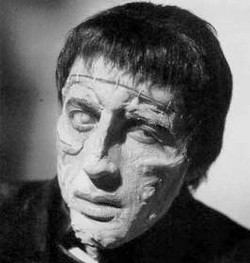 The profession has been a bit kinder to Christopher Lee since the mid-eighties, with slightly better – if self-referential - roles being offered. However, it was the end of the nineties which saw him truly get back on track: with Tim Burton’s Sleepy Hollow (1999), followed in 2001 by The Fellowship of the Ring. He even managed to belatedly get his own piece of the Star Wars action in Attack of the Clones (2002), Revenge of the Sith (2005) and The Clone Wars (2008).
If he was still making Jess Franco films and clunkers like Starship Invasions would he have been knighted this year? I very much doubt it. But it’s for these films that he deserves our respect, just for the dignity he managed to add to them. I imagine he’s very happy with his knighthood, but I’d rather confer on him the much more honourable title of Great Dark Overlord of the Z-Movie.
Or something.
|
 robyn
robyn