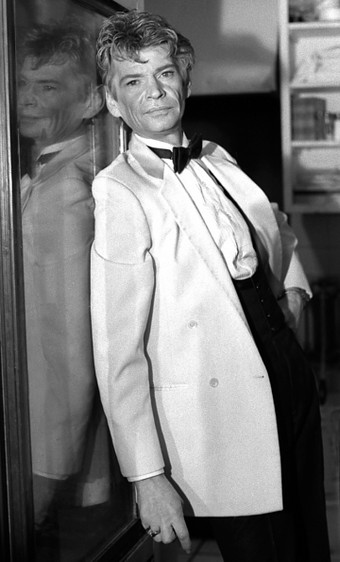
Photo by Lois Siegel

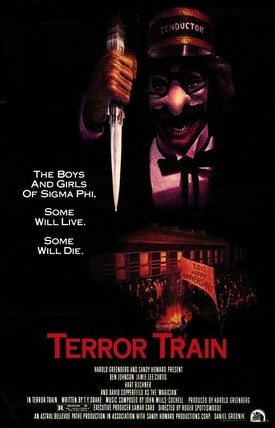
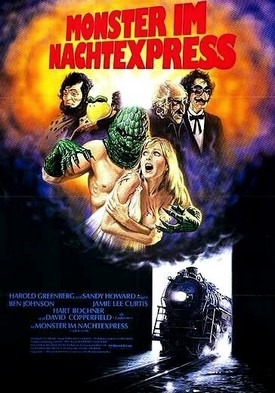
Anyone who has seen Roger Spottiswoode’s TERROR TRAIN (1980) will no doubt remember the character of the killer Kenny Hampson, the troubled geeky college kid who was the victim of a cruel practical joke played on him by his peers. Derek MacKinnon, the actor who played Kenny, has a lot more television and film credits to his name than the Internet would lead you to believe. MacKinnon, who still resides in Canada, spoke to me recently about the film that put him on the map nearly 30 years ago, and also discussed his career since playing a psychopathic killer who literally went off the rails of his own sanity.
Jonathan Stryker: Derek, it’s a pleasure to finally speak to you. I’ve been a fan of TERROR TRAIN for almost 20 years. I remember the film when it was out in theaters, but I didn’t actually see it until I rented it on VHS.
Derek MacKinnon: Well, thank you for aging me!
JS: (laughs)
 DM: I had a fan who got in contact with me last recently and she said, “I’ve been watching you since I was seven years-old.” I said, “Excuse me?!” (laughs) I mean, we were kids when we made that film. So, now Jamie (Lee Curtis) and I are talking, and I asked her if she gets this type of reaction from fans, too, and she said yes. So, it’s funny because you don’t think that you’ve gotten that much older.
JS: Does it feel like it’s been almost thirty years since you made that film?
DM: No. And I remember that it was Jamie’s 21st birthday when we shot the film (in November 1979). Her parents came to the set to see her in Canada. That was really fabulous, to meet Janet Leigh and Tony Curtis, although they weren’t talking at the time.
JS: That must have been so much fun, to be doing a film with Jamie Lee Curtis who had been in the precedent-setting HALLOWEEN, and then meeting her mother who was in the film that started it all.
DM: Yeah, you bet.
JS: Horror films, like any other genre, seem to go in stages in terms of the types of movies that get made at a particular point in time, and TERROR TRAIN was made at the height of the slasher film craze, arguably precipitated by HALLOWEEN. I love this time period, as I grew up seeing all of those great ad slicks in the newspaper for the films, but during the late 80’s it seemed as though horror took something of a nosedive in terms of quality.
DM: Well, I always felt that we helped open the door for everybody else. The film is loosely based upon “And Then There Were None” by Agatha Christie. T. Y. Drake who wrote the film put a new spin on it. Drake had each of us write an essay about the characters we played before we even did the film. My character, Kenny Hampson – who was he and where did he come from? We all created our own back-story. When Drake wrote the script, our back-stories were retained and kept in mind. There’s a line in the film where Jamie Lee says, “He killed someone before.” And that was taken from my essay. I was really surprised that Drake gave us that kind of leverage to be able to write our own part, in a sense. I think that’s why it came out more real, for a bunch of kids. It was also the first Canadian-American produced film ever made. I could have jumped on the horror bandwagon at the time. I’ve been offered more parts than you can shake a stick at, for other horror films like HAPPY BIRTHDAY TO ME, MY BLOODY VALENTINE, you name it. They were all handed to me on a silver platter. But, I’m glad that I didn’t, though.
 JS: Why?
DM: Number one, I’m claustrophobic. After I was done being on that train, the last thing I wanted to do was be in anything that was small or confined. When you do these roles, they always put you in the most difficult situations you can imagine. For MY BLOODY VALENTINE, I went to the Sydney Mines in Nova Scotia where it was shot. Before I said no to the role, I actually went down there. My grandfather used to work there. So, I went into the mines…and I panicked. I thought, I’m going to be down here for five months? That was a horror story in itself, to shoot that kind of thing!
JS: Were you born in Canada and did you like movies when you were a child?
DM: I was born in Annapolis Valley in Nova Scotia, Canada. My father was the base commander of an air force base. The only theater that we had there was the theater that was on the base, and there was also a drive-in. I suppose that I was like a lot of other kids who think that they’ll become movie stars to get them off the rock they are living on.
JS: What was the first professional acting job that you had?
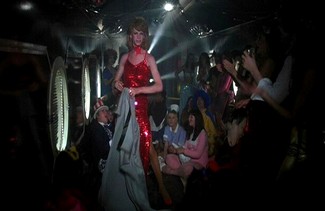
DM: I was doing a live female impersonation group show in Montreal, Canada when the casting director for TERROR TRAIN saw me. The character of Kenny Hampson was already cast; they had already chosen someone for that part. But, the casting director went to Roger Spottisewoode, the director, and said, “You’ve got to see this guy.” So, he came to the show and I found a note in my dressing room that they wanted to meet me. I went on an audition, and there were two of everyone on this film: two Mitchy’s, two Ken’s, two Doc’s, etc. And they had me to come in and read for about two weeks. Finally, I was really getting pissed off, so I told them that they were wasting my time and that I had to go to work. At that moment they told me that I got the part. I said, “Fine.” I was about to leave and they asked me if I realized that I was playing the lead role in a film by 20th Century Fox opposite Jamie Lee Curtis and David Copperfield. I fainted right on the spot.
JS: I guess that answered that question.
DM: And I remember what Roger Spottiswoode said to me as I was leaving the audition. I was walking towards the door, and he said, “You’re nothing but a goddamned sniveling little faggot that I found in the garbage in an alley in Montreal.” As I was opening the door, I just turned and looked at him and said, “What did you say?” And he just stared at me for a moment and he said, “My God – that’s him! That’s Kenny!” So, that’s how that became reality. He saw the anger, the hurt, and everything else and he later told me, “I never felt so cold in my life, the way you did that.” My whole life changed overnight. This movie was so far removed from what I was used to. I wasn’t allowed to go back onstage because the publicity department for the film didn’t want anyone to know that I was doing female impersonation because they felt that that would have given away the secret of the story.
JS: In TERROR TRAIN, when you played David Copperfield’s assistant, was it in the original script that your character was dressed up as a woman, or was this twist added after they saw you in the female impersonation show?
DM: No, that was in the original script. Remember, my role was already cast, so they paid off the original actor who was cast when they brought me on. Over 5,000 people were looked at for my role, both Canadian and American.
 JS: Wow.
DM: I found out about this after the fact. I was told that my character was one of the most difficult to cast. They kept me segregated from everyone else on the set. Roger did some nasty things to me to keep me in character. Most of the time they kept me in my trailer, and I was kept away from the other actors unless we were on the set. That was a difficult shoot. We worked 16-hour days. The shoot was about four or five months. Some of the actors on the film were doing two or three movies at the same time, going back and forth.
JS: What can you tell me about Sandee Currie, aka Sandra Currie and Sandra Warren, the actress who played Mitchy?
DM: She was in Toronto. I haven’t seen here lately, but she was on some live shows. I haven’t kept in touch with her.
JS: I’d love to get in touch with her. Sandee was in another Canadian horror film that I love called CURTAINS, but that production was reputedly plagued by financial issues.
DM: That was typical of Canadian films at that time. I was great friends with D. D. Winters, who played Merry. She was Vanity in Prince’s band. The last I spoke to her was around 1994. You know, the U.S. dollar was so much lower at the time, that it was much more lucrative for Americans to come here (to Canada), and when they shoot a film they have to shoot with 50% American and 50% Canadian. We only have one union here, so Canadian actors always got had. Money was…you could only go to one level and that was it. “We don’t need agents here,” that sort of thing. It’s better now, but back then it was terrible. To get into the States, which most of us did, you needed a green card. You either had to get married, or find a way to get through, which I did. My agent is in New Jersey. After TERROR TRAIN and a few other projects, I began to work in Atlantic City. But making TERROR TRAIN was a long shoot, and we had such momentum, and Roger Spotiswoode will even tell you this, that we just kept going and didn’t want to stop. But, there were more accidents than you could shake a stick at.
JS: The film is very physical, so I can imagine the propensity for danger being fairly sizeable.
DM: The scene with the poker – they had me in a position where they would pull me back, but the prop department didn’t put the collapsible poker in place, and the real one was used. They used my stand-in, and the poker actually went through the guy’s face. Jamie Lee Curtis walked off the set. Also, the scene where I smash her head up against the door and she hits her head on the doorknob, that was real.
 JS: All of Jamie’s reactions in the film come across as genuine: the fear and the anxiety. It’s a terrific performance on her part.
DM: At the time, she felt she wasn’t being taken seriously as an actress because her parents were famous, so it was really important to her that she not live off of their coat-tails. Same thing with Hart Bochner, he’s Lloyd Bochner’s son. Timothy Webber who played Mo, he has gone on and done a lot in Canada (“Men in Trees” television series). He comes from my hometown. I mean, what are the odds that two young guys from Nova Scotia would end up in the same movie?
JS: What other incidents occurred on the set?
DM: Another time, when I’m popping the light bulbs with a 14-pound iron wrench, all the glass shattered on me and collected all over my costume. You know, I’m wet, I have fake blood on me, and after the scene was shot they told me not to move and took all the clothes off of me. I almost got electrocuted in that scene, too, because remember I was wet and I’m stepping in water while knocking out all of those bulbs. In another scene, the one with Hart Bochner when I’m under the bench, I had to be there no matter what he was doing. I swear, I was under the bed for three days shooting that. John Alcott, who won the Oscar for BARRY LYNDON (cinematography), buddied up to me. When Roger would tell me one thing, John would shine a pin light in my eyes to get a certain effect and tell me when to come closer and told me how to move. Roger wouldn’t do that because this was his first film and he simply didn’t know these things. But John was a master and I felt like he was the true director of the film. I think I trusted him because he took to me and I knew his work.
JS: Well, as you know it seems as though horror sort of died down in popularity in the late 80’s and early to mid-90’s until Wes Craven directed SCREAM, which introduced horror to a whole new generation of movie-going horror fans. It made horror a viable genre at the box office. Now, horror has been enjoying a resurgence in popularity and it almost seems out of control with the way that all of these prequels, remakes, and sequels are being made.
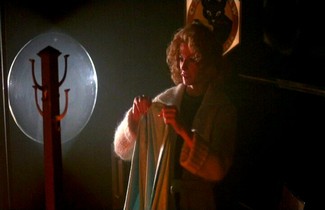
DM: Well, the original ending of the film has my hand coming up through the water, like in CARRIE. And because of CARRIE, it was too similar to it and therefore it was cut. If the film was successful, then this would be seen at the beginning of the sequel. The film was very smart in the way it was made, because I am seen throughout the entire film, just dressed as a woman. The critics in New York had to watch the film twice because they didn’t believe that I was really seen all the time. I told them to watch the film closely and listen to the music because my music follows me wherever I go. There are scenes with David Copperfield and I am standing right beside him and no one knows that it’s me.
JS: I was completely fooled. Completely! I wonder if I would have picked you out if I saw it in a theater, because the TV screen is so much smaller. Then again, I was fooled by THE SIXTH SENSE! (laughs)
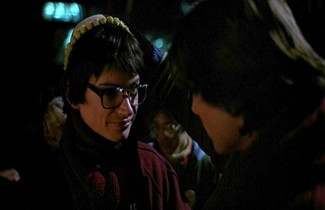
DM: They wrote it in such a way that took into account when I was standing next to David Copperfield you saw me, and then I would disappear to kill someone and then come back as the assistant and be visible again. In fact, the first scene that happens in the film, where Mitchy cons me into kissing the girl and it’s really a corpse, was the last scene shot. I was supposed to be naked in the scene and they were really insistent on it. But, I felt that Kenny was too nerdy and awkward that there was no way that he would get completely naked with the prettiest girl in school. David Copperfield was done filming at this point and had gotten his People’s Choice Award. The rest of the cast had all flown in to do this last scene, and they all knew what was going to happen, but I didn’t. So, when I walk up the stairs, I didn’t know what was going to be in the room. This was a five-camera set-up. They said, “We’re only going to do this once.” There was no rehearsal. When I go in and get into bed and I hear Jamie say, “Kiss me, Kenny,” my reaction to the corpse is real.
JS: That’s like Ridley Scott’s tactic when he shot the chestburster scene in ALIEN.
DM: That’s exactly right. I was truly freaking out. And they knew that I would, but I had no idea. And now there is a law stating that you, as a film production, can no longer use deceptive tactics to get a performance. It took me about six months to get Kenny out of my head. No one wanted to have Thanksgiving with me because they didn’t want me carving the turkey. “Don’t start with me!” (laughs) What’s really hard is when you shoot a movie, then everyone goes away for six months, then you come back and do the dubbing in the ADR booth and you have to recreate the performance. I did it within a matter of moments, and Roger was just amazed. Even he said that it takes at least a few days.
JS: What did you do after TERROR TRAIN?
DM: I did a lot of work as a casting director for David Cronenberg. I casted DEAD RINGERS. I casted RAISE THE TITANIC. I did that for seven years. I worked for a film company called Taurus 7 (Film Corporation). I casted a film called EVIL JUDGEMENT. This was in a building that housed about six film production companies.
JS: Really? I guess that’s where Téléfilm Canada operated out of?
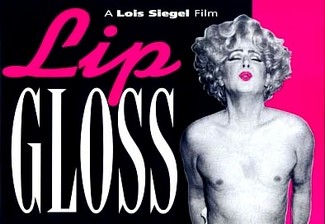
Photo by Lois Siegel
DM: Yes. Being in my office where I was, my boss would lend me out. I was the worm on the hook, so to speak, for Cronenberg. It gave me the chance to see how the business side of it worked, and it was as crooked as the day is long. Like they say, “If you fit the costume, you’ve got the part.” And that’s very true. By that time, I did LIP GLOSS, the documentary that Lois Siegel directed. That was my idea from the get-go. It’s about the underbelly of the female impersonation world. I wanted to make the film because I got so sick and tired of people thinking that I was a transvestite. I am known internationally onstage as a female impersonator. I do not run around in a dress. There is a difference. That’s why Lois made the film, and it’s a film that I’m extremely proud of. I remember when I was making TERROR TRAIN, for a time I lived with David Copperfield because I wanted to learn all of his tricks like the levitation, etc. So, naturally, the press painted a picture that he and I were more than business associates. This caused a problem between the both of us, but eventually Claudia (Schiffer) came into the picture. (laughs) When I made BREAKING ALL THE RULES in the early 80’s, the director wanted me to play my part as a limp-wristed stereotype. I was really pissed and told him to grow up, that we’re not like that. I was with my boyfriend for 10 years and the press would have a field day if we were seen together on my days off, but he couldn’t handle the press. It changed our relationship, and he couldn’t handle the constant intrusion of the media. What good is success if you have no one to share it with? Of course now, “coming out” is more acceptable, nothing like it was years ago.
JS: How did you get the role in FAMILY MOTEL?
DM: Lois, with whom I worked on LIP GLOSS, was the casting director on FAMILY MOTEL, and begged me to be in it. The film is about homeless people living at the Concord Motel in the impoverished section of Canada called Vanier, which is about five hours northeast of Toronto in Ottawa. It’s similar to the Bronx in New York in terms of poverty. There were few actors in the film, everyone is a real-life homeless person living at this motel. The film has shown a light on this awful situation that immigrants are living in when they come here to flee their homeland due to turmoil or political upheaval, and it won several awards at film festivals. The movie was scripted and improvised, but my part was ad-libbed. But movies are rarely released with the title that are shooting with. There were so many horror films that I was offered after TERROR TRAIN, you know, you’re offered a script with a working title, and when the film is made the title is changed several times and you have no idea what you were offered because no one tells you later. I also did a TV series called “My Lovely Bank” in 1982 and I played a gay character, which could not get past the censors in Canada. That was produced by Suzanne DeLaurentiis, Dino’s niece. Then I did a lot of things for Lois (Siegel) in Canada, among them “Pancake on a Hot Tin Roof,” LIP GLOSS like I mentioned, and of course, FAMILY MOTEL. I’ve also done a lot of live theater with Nannette Workman, she’s like the hard rock queen in Quebec. Canada is quite the melting pot for artists, but the money here is not worth it so we all go to the States. Like I said, my life changed when I did Atlantic City and Broadway. To this day it is just like a whirlwind. I still cannot believe that I did so many jobs at once. I did Merv Griffin and “The Tonight Show”, which I did not do until after TERROR TRAIN was released. Fox did a lot to keep the secret of my character under wraps. I talked to Robert Englund many years later and he said, “I based an awful lot (of Fred Krueger) on you.” I said, “How? Kenny wasn’t that way.” And Robert said, “Yeah, in a roundabout way he was.” But, TERROR TRAIN wasn’t done for shock value. It was done with very little gore.
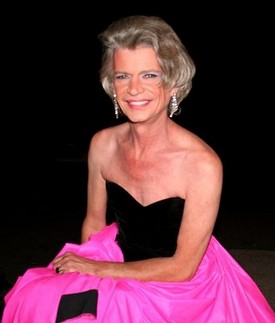
Photo by Lois Siegel
JS: Do you have any of the props from the film?
DM: I did, but my house was robbed right after I did the film, and all of the things that I had from the movie were taken.
JS: Oh, Christ…
DM: Yeah. I suspect that it was someone who knew that this stuff would be worth something later on. They have TERROR TRAIN t-shirts available on the Web now.
JS: Really? I haven’t seen them anywhere – not even at the horror conventions like Fangoria, Monster Mania or Chiller Theatre.
DM: Oh, they’re out there. Getting back to the film, I now think about the people who have since passed on, the members of the crew who have passed away since the movie was made –
JS: I know, John Alcott died in July 1986. That was a real loss.
DM: Yes, I agree. But as I said, I think of the people who have since passed away – I sometimes think that it’s a bad omen. I speak to Jamie here and there, but I haven’t spoken to Hart Bochner in ages. Like I said, we were kids, and TERROR TRAIN was a fun set. I played eleven characters in the film and it was a lot of work. Anthony Sherwood, who played the crocodile, is a huge deal in Canada now. He was in “Street Legal” for many years.
JS: How would you describe the professional life in Canada?
DM: It’s far more laid back than in the States. Plus, you don’t get recognized or harassed on the streets by fans the way you would in the States. I love doing the work, but sometimes I hate the publicity that goes along with it. It has ruined many of my personal relationships, you have no idea. We don’t have that Paris Hilton and Lindsay Lohan insanity here, not to that degree. It’s much more comfortable here, but sometimes it is more difficult to get projects off the ground because you need the publicity.
JS: How can audiences see your more recent work?
DM: You can see some of my films on VHS at Lois Siegel’s website.
JS: Thank you, Derek.
DM: Thank you.
|
 jonathan