|
I have always been a fan of the darker side of cinema. I grew up on horror movies as a kid and have always been fascinated by the scary side of human nature. Most of the films I grew up watching were American films such as The Texas Chainsaw Massacre, Halloween and Friday the 13th. It wasn't until I was in my twenties when I discovered horror films from outside of the States. Being half Italian myself, I gravitated towards Italian cinema and I soon found they had their own takes on life and for that matter entertainment. Italian directors seemed to have no self-censor button and were willing to show anything in their movies, whether it was for shock value or for brutal honesty is debatable.
One of my favorite subgenres of Italian cinema is without a doubt, Cannibal films. Considered to most as exploitation movies that serve to the lowest common denominator as they all feature graphic violence, but also are considered horror movies as well because of the amount of said violence. Really, the films fall under the "jungle adventure" genre as they all feature a white man/woman in peril in the jungle. While at a glance these films seem to be exploiting the cultures of primitive tribal people, they actually shine a not-so-positive light on modern man and they all ask the question, "Who really are the savages?"
Due to their graphic content, the films of this subgenre are often the center of controversy. Many of the films include genuine slayings of animals, making them a common target of censors around the world. The inclusion of graphic gore and sexual violence has also landed the films in censorship problems.
Early Cannibal Films
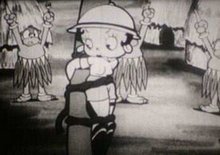 Long before the Italians perfected the Cannibal genre, there had been lots of Cannibal subject matter in movies, such as the films of Abbot and Costello, Bob Hope and Bing Crosby, and cannibalism could also be found in children's cartoons such as Betty Boop and Looney Tunes. More often than not these features racist images towards Africans and involved a very fictional depiction of tribal Africans.
"Understandably, these clichéd images are very tame and somewhat humorous, with the stranded protagonists usually being cooked alive in the Big Black Cannibal Pot while the natives dance around." - http://www.indiefilm.com/cookbook/encyclopedia/ecmIntro.html
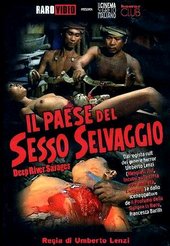 The Man from Deep River
In 1972, director Umberto Lenzi made a film entitled, Il Paese del Sesso Selvaggio or The Man from Deep River. It featured Ivan Rassimov in the lead as a photographer who goes into the jungles of Thailand and ends up being captured and held prisoner by the natives. Soon Rassimov's character starts to adapt to the tribes ways and slowly becomes one of them, marrying the chief's daughter and even helping the tribe defend their village from a rival tribe, who just so happen to be cannibals. Though the film is not exploitive, as it focuses on a genuine tale of a modern man getting in touch w/his primitive roots, it did lay the template for Cannibal films in the future with its level of violence and
Cannibal subject matter. The film is considered to be the first "cannibal film", a subgenre of European exploitation films that was prevalent in Grind house cinema in the late seventies and early eighties.
The Cannibal Films of Ruggero Deodato
One of the most infamous directors of Cannibal films is without question, Ruggero Deodato. His "Cannibal trilogy" consisting of Ultimo Mondo Cannibale (aka Jungle Holocaust), Cannibal Holocaust (the most infamous film of the genre) and Cut and Run are among the best of the genre.
Ultimo Mondo Cannibale
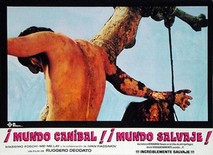 The first of the trilogy, 1977's Ultimo Mondo Cannibale follows in the footsteps of Lenzi's Man from Deep River as it's yet another story of a white man captured by a South American tribe of cannibals and his quest to escape their clutches. The film starred Massimo Foschi in the lead role and co-starred Ivan Rassimov and Me Me Lai, both of which were also in Man from Deep River. Unlike Rassimov's character in Deep River, Foschi's character does not want any part of his captors, whom are even more savage than the tribe in Man from Deep River, thus is the crux of the character's plight - he must think like a savage to escape. The film ponders the question, "Can this modern man survive in a stone-age world?"
Cannibal Holocaust
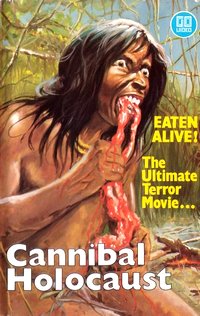 Cannibal Holocaust, released in 1980, is by far one of the most notorious Cannibal films ever made and possibly the most infamous film to come out of Italy period, in fact the film was deemed as so reprehensible that it landed Deodato in court.
Ten days after the premiere in Milan, the film was seized by Italian authorities and director Ruggero Deodato was arrested on the belief that his film was a real snuff film. Facing life in prison, Deodato was able to bring all the actors onto a television show and demonstrated in court how some of the special effects were accomplished. The charges were dropped, but because of the still extremely explicit content, the courts still banned the film because of the real cruelty towards animals. Deodato was ultimately held on charges of obscenity and animal violence. Four years later, in 1984, Deodato was able to over turn the courts rulings and the film was un-banned.
The story follows a crew of filmmakers as they travel into the jungles of South America to film a documentary about cannibals. The crew never returns and a rescue party is sent, but all is found are the reels of film the crew left behind and the shocking footage contained on them. The shocking footage is not that of the actions of the tribal people, but of the film crew as they rape and pillage their way through the jungle and provoke the tribe in order to get "good" footage - even going as far as to burn down one the tribe's domiciles with them in it. The film begs the question, "Who are the real savages?".
Though somewhat crude in its format, Cannibal Holocaust tells an interesting morality tale about society--how modern-man has become lost in its ideological thinking and has lost touch with what makes us human.
Cut and Run
The last part of Deodato's trilogy is the film, Cut and Run, which was released in 1985 after the Cannibal film boom of the late 70's and early 80's. Although from a technical standpoint the film it is the best looking due to it having the largest budget, it's is the least effective of the films, due to its lack of a morality driven storyline and also the cannibals in the film are not the central theme of the film. Cut and Run is a very entertaining film, but only a footnote in the history of Cannibal films.
The Cannibal Boom
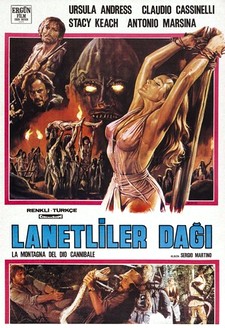 The cannibal boom is a period in the history of exploitation film, lasting roughly from 1977 to 1981, where cannibal films were at the peak of their popularity in Grind house theaters and cinema. Although Lenzi's Man from Deep River would start the cannibal genre, it wasn't until Deodato's Ultimo Mondo Cannibale was released in 1977 that a boom of cannibal themed movies would start. The films would range from the softcore erotic films such as Joe D'Amato's Emanuelle and the Last of the Cannibals (1977) to outright horror such as Marino Girolami's Zombi Holocaust (1980) which mixed cannibals and zombies in the same film. A lot of these films were low budget at corny and made to solely to cash in on the success of the genre, Jess Franco's Cannibals (1980) and Alain Deruelle's Cannibal Terror (1981) would be two examples of that.
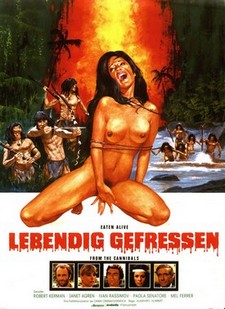 Three standouts of the boom, without question are Sergio Martino's Mountain of the Cannibal God (1978) and Umberto Lenzi's Eaten Alive (1980) and Cannibal Ferox (1981). All three of those films are well made and feature great casts. Of the three, only Cannibal Ferox would come close to matching the vileness of Deodato's Cannibal Holocaust as Lenzi seemed to trying to outdo the quotient of violence of Deodato's film. Ferox is much more exploitive in nature than Holocaust and skimps on the morality and goes straight for shock value.
Even in this decade the love and want for Italian cannibal films is still going strong. Before his death in 2007, Bruno Mattei (Hell of the Living Dead) would make two cannibal films in 2003, Nella terra dei cannibali and Mondo Cannibale - both complete rip-offs of both Cannibal Ferox and Cannibal Holocaust, respectively. More recently Isle of the Damned is getting a lot of buzz even if it's just a spoof of Italian Cannibal films (and not made in Italy).
In a whole, Cannibals films will not appeal to everyone. They're only made to reach a small amount of film fans that find them entertaining or at least interesting, which is why they often fall into the category of "cult films". Exploitive? Overly violent? Made to shock? Yes to all those questions, but they also teach morality in a sort of crude way, which makes them timeless, odd chunks of cinematic history and worthy of being discussed, analyzed and reviewed.
|
 the rev