 Anyone who grew up in the late ‘80s and into the ‘90s is likely to laugh in your face if you were to suggest the validity of made-for-TV horror as a legitimate area of the genre. We poor souls are used to tele-tripe like THE LANGOLIERS, so can you really blame us for our disdain for small-screen genre fare?. This got me thinking, whatever happened to the golden age of creepy, well-crafted small screen screamers? Back in the day (read: ‘70s and early ‘80s), it seemed like there were multiple worthy flicks emerging outside of the silver screen on a yearly basis. We’re going to take a trip back to look at some of the standouts that have rather unfortunately faded into relative obscurity over the years, despite that the fact that you can flip to the USA Network and check out THE SKULLS 3 seemingly any day of the week. The world of cinema is a cruel mistress, indeed…
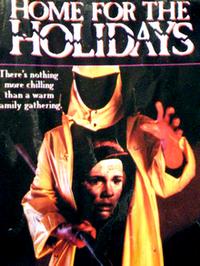
HOME FOR THE HOLIDAYS (1972)
A young Sally Field stars as one of four sisters who return to the house of their youth to tend to their ill father. Problem is, dad believes that his present wife is slowly poisoning him, which doesn’t make for the most festive Christmas season. The tension is palpable, as the sisters have their own unresolved issues with each other, which bubble to the surface while the women attempt to determine whether their new mom is in fact a cold-blood murderess. This is an early variant on the slasher subgenre that makes the absolute most of its few locations, and features great performances across the board. Minimalist in approach, but high on suspense, HOME FOR THE HOLIDAYS is one of the most underrated (and virtually unknown, these days) seasonal stalker films, and even packs a couple of nice final act twists.
DON’T BE AFRAID OF THE DARK (1973)
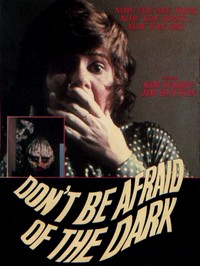
Though it is still relatively difficult to find, this is one of the most well known and fondly recalled of the ‘70s TV horror films. Kim Darby is a housewife who moves into a huge new home with her businessman husband, who always seems to be at work. Finding herself with a ton of alone time, Darby starts searching around the house, eventually coming upon a walled-up fireplace that she can’t take her mind off of. Despite the reluctance of the handyman, and her husband’s insistence that her interest is silly, she demands it be re-opened, which ultimately proves to be a bad idea. Turns out the fireplace is home to a group of miniature creatures who are dead set on making Darby one of their number. As they begin to stalk Darby, she pleads to her husband that something evil is amiss, and naturally he doesn’t believe her. At first, the tiny monsters seem to be causing little more than mischief, but soon enough things turn murderous, leading to a series of increasingly suspenseful setpieces that are quite intense for a small screen flicks. The downbeat ending helps make DON’T BE AFRAID OF THE DARK one of the most memorable TV movies of the 1970’s. I’ve seen VHS copies go for $100 on Ebay!
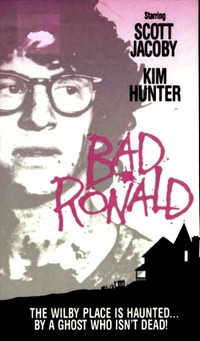
BAD RONALD (1974)
This is one of the real winners from the made-for-TV heydey, when unique and challenging horror was not confined to the big screen alone. Ronald (Jacoby, in an intelligent and layered performance) is a troubled teen who sturggles to fit in. When the incessant taunting he receives from neighborhood children results in Ronald accidentally killing a young girl, his loving and overprotective mother creates a secret room underneath the main staircase of their house for him to hide out until the heat subsides. The sequences in which Ronald and his mother put together the room, during which director Buzz Kulik shows their day-to-day existence, as she feeds him meals and offers soothing words to a boy who is suffering from a heightening level of cabin fever are touching, with a genuine sense of affection established between the two. Despite the fact that he is essentially a murderer, there is a sincerity in the onscreen dynamic between he and his mother that ensures a sympathetic position from the audience. Time passes, and Ronald is never caught; then one day his mother is feeling ill (possibly heartbroken), and drives to the hospital, where unbeknownst to Ronald, she passes away, leaving her son alone in his hidden room to wonder what has happened. Things get truly interesting when a new family moves in, adding an unwelcome intrusion into Ronald's world, which is already highly disturbed and volatile as a result of his perceived abandonment. By this point, he has discovered that he can move about the house behind walls via a series of old passageways that are part of the old-fashioned architecture. He spends his days spying on the family, and sneaking out to steal food when they are out or in bed sleeping. He eventually develops a crush on one of the young daughters, causing him to become more careless in his intense desire for human contact. Because of the increasing amount of time spent outside of his hiding spots, Ronald is noticed by a nosy neighbor, who must be silenced. By the third act, Ronald is pretty much insane, by no fault of his own, which creates an unsettling dynamic where the audience must determine how far they are willing to go in order to remain on the boy's side, and how many indiscretions can be tolerated before he becomes a true villain. When all is said and done, BAD RONALD becomes a provocative, textured, and highly unsettling work of gritty 1970's genre filmmaking that offers no easy answers and forces the audience to put themselves in the character's shoes to decide what they would do if they were confronted with a difficult circumstance such as this.
DARK NIGHT OF THE SCARECROW (1981)
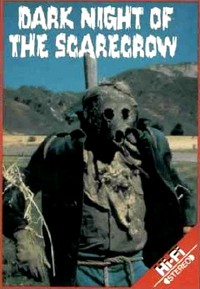 This made-for-TV suspenser is supernatural in nature, yet quite grounded in tone and approach, and remains one of the best of its kind to this day. Drake is a mentally challenged man whose best friend is a young pre-teen girl. Some extremely intolerant men from town are none too happy with their relationship, and are constantly looking for a reason to persecute poor Bubba. The opportunity arises when Drake is seen carrying the seemingly dead body of the young girl to her parents' house. Unaware that the girl was attacked by a dog, is not dead, and was in fact saved by Bubba, they track him down to his mother's farm. When they discover him hiding inside the titular scarecrow they proceed to gun him down in cold blood. The men, led by Durning (who plays a great heartless asshole, and is undoubtedly the film's true antagonist), are unjustly acquitted by the town's court system, prompting Bubba's distraught mother to put a curse on their heads. One by one, the men are stalked and murdered by a mysterious figure who appears as a scarecrow. Virtually devoid of any bloodshed, DARK NIGHT instead relies on a deft ability to create dense atmosphere and suspense. Although the men are set up to be mostly unsympathetic, there is a great deal of tension leading up to their deaths, despite the fact that audience is rooting for them to go down. Simple and direct, DARK NIGHT OF THE SCARECROW is the kind of film which is nearly extinct - one that refuses to fall back on gimmicks or flashy camerawork, but instead takes the time to craft an interesting story and some good old-fashioned chills. Although it is tough to come across these days, you'd be well served to seek out a copy of the Key Video release on Ebay, as it is one of the unsung classics of this fruitful period of TV terror
These are in no way the only made-for-TV horror films that deserves mention here. Some others that are in dire need of rediscovery include: GARGOYLES (which actually has made its way to DVD recently), THE BERMUDA DEPTHS, SOMEONE’S WATCHING ME (directed by John Carpenter), THE CAT CREATURE, DYING ROOM ONLY, STRANGER IN OUR HOUSE, and THE BABYSITTER. One of the best TV horror flicks from this period is Steven Spielberg’s feature-length debut, the vastly underrated DUEL.
|
 dave
dave