 Greetings to you all. Before I get started, I'd like to say that I've never done an article for a website and I'm greatly looking forward to doing this 4-part series. I'm not the best speller or great at sentence structure, plus I kind of failed Language Arts in the 7th grade, so please bear with me if something doesn’t read right. But enough excuses, let's begin.
The point of these articles is to introduce the average viewer to the ever-so-famous series of Godzilla films. This will be presented as an introduction, rather than reviews, because there are a lot of films in the series—28 to be exact, not counting the 1998 American remake—and they don't all connect. Then there are the monsters. You are probably familiar with the classic ones—Rodan, Mothra, and King Kong—but a monster's character in one film can be completely different in another film, Godzilla included. With luck, my work here will help make sense of the films and add some new fans to the base.
I first discovered Godzilla when I was around 2 - 4 years old. I always had a thing for giant monsters, having watched The Blob, Theme!, It Came from Beneath the Sea and King Kong. Those films didn't have the vast range of stories and creatures as Godzilla and most didn't have Godzilla’s trademark Monster-on-Monster battles. I can safely say I've been a lifelong fan and, hence, very proud to be doing this series.
To get started, we must open at the very beginning. And all this began in the 1950's with a Japanese production company called Toho…
The Birth
 So, what birthed the franchise that would spawn cartoons, TV shows, songs, toys, video games, t-shirts and a legacy known worldwide? Two things: stop-motion animation monsters and nuclear war.
Inspired by the stop-motion animation in the 1933 classic King Kong, designer and creator Eiji Tsuburaya wanted to do a monster film. His goal of doing a stop-motion animation film was quickly dashed by budget and time constraints. Working with Toho and director Ishiro Honda, Tsuburaya’s was able to at least realize his monster movie dream. Honda was a soldier for the Japanese Army. On his way home from serving in WWII, he traveled through Hiroshima and witnessed the horrors of nuclear war. His goal with Godzilla was to show the horrific aftermath of such warfare and send a message of the nightmarish world it could create.
Things really got moving in 1953 after the release of the classic American monster film The Beast from 20,000 Fathoms. The basic plot—a prehistoric monster awakens and creates chaos and destruction in the modern world—would later be used for Godzilla. Toho Company, wanting to cash in on the monster success of The Beast from 20,000 Fathoms, gave Honda, Tsuburaya and producer Tomoyuki Tanaka the chance to create a film that would put them on the map.
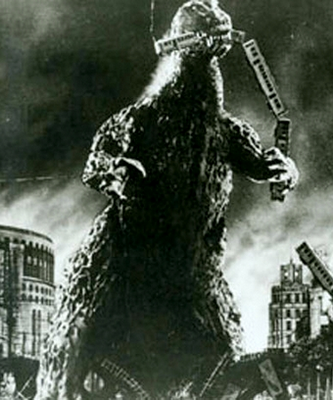
As previously stated, Tsuburaya wanted to do stop-motion, but, due to budget and time, he was forced to resort to the next best thing: Suitmation. Simply put, Suitmation is an actor in a monster suit. It would be a trial and error method, as the first suit they made was aesthetically great, but functionally frustrating. Though they tried, it was difficult to create a monster suit that was both scary and moveable. Despite falling short of Tsubaraya’s lofty animation goals, his work would influence a genre for decades to come.
The story for the first Godzilla film is a classic love triangle. Main characters Serizawa and Emiko are to be engaged, but she is in love with Ogato, a Naval Officer who's been covering the recent fishing vessel disappearances. Dr. Serizawa has an invention that could help with the recent horrors that had come (Godzilla), but would struggle with the decision to use it. The film also revolves around Dr. Yamane, Emiko's father, who feels there are lessons to be learned from Godzilla and believes the hope of destroying the monster will also destroy the possibility of learning those lessons.
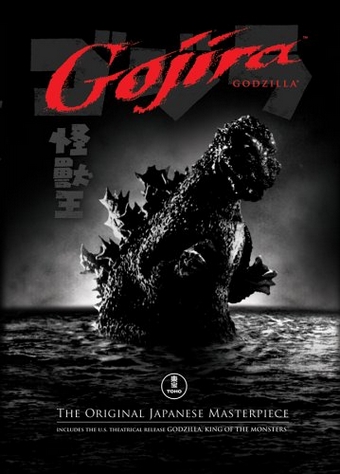
On November 3, 1954, Godzilla (or, in Japanese, "Gojira") was released in theatres. It was a big year for films in Japan and Toho had three great films that year. Akira Kurosawa won an Oscar for Best Foreign Film for Seven Samurai, a film that is counted among the greatest films in movie history. The release of the first two Godzilla films launched a franchise that would grow to epic proportions. All three of the aforementioned films were box office successes that year, which was good considering the financial risks they took.
Of course, America was watching from across the Pacific and was anxious to release Godzilla in the states. There were a few issues to be resolved first, though. Americans didn't care for the anti-nuclear messages, feeling the use of nuclear power against Japan was an appropriate attack, given the face of the war. With the growing Cold War and the Arms Race promoting nuclear power, they felt such parts wouldn't apply very well to the American viewer, and so the scenes were cut.
Another factor was whether or not the film would sell. They hired well-known 1950's actor Raymond Burr to shoot extra footage, and changed the story to revolve around his character—an American reporter named Steve Martin who was visiting Japan—and had the events take place from his point of view. This version of the film would have heat from fans for years to come.
It was after this epic film was released that the famous series full of monsters and aliens and machines would begin. Godzilla would have several makeovers and altered looks, as well as personality changes. He would be villainous victim, an unwanted aide, a hero, an anti-hero, and, in one case, a pure evil beast. How might you ask? The Godzilla series is primarily broken into 3 Eras: the Showa Era, the Heisei Era, and the Millennium Era. Each era takes place at different times with different themes, different numbers of monsters, and different continuity in the films. We'll be starting with the first half of the first era, Showa.
The timelines of the films will give the name, year of release, the film’s monsters, and what makes each film unique. While not being total reviews, I will present an idea of what the general fan base thinks of the films; some are praised among the diehards, while others are loathed. Whether they are loved or hated, each film does have something unique that is worthy of at least one viewing.
The Showa Era - First Half
Godzilla Raids Again (1955)
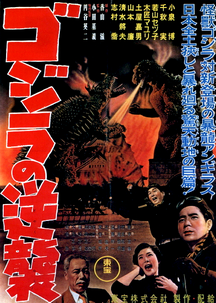 Monsters: Godzilla, Anguiras
Lowdown – This film goes to show that film studios will always be the same, regardless of country. If a film makes a killing, the execs will milk it with a sequel and Godzilla was no exception. After the film’s success, they knew they had to make a film to follow. That film was Godzilla Raids Again (Gigantis the Fire Monster for American audiences). This film marks the first time in the Godzilla series that a monster vs. monster battle took place, as it had a female Godzilla battle against Anguiras, a four-legged, spiked-shelled monster. Anguiras was also the first Monster to be identified as a “Tooth and Claw Monster”, which means he doesn’t have powers or extra abilities (ala Godzilla's radioactive breath) and uses only physical attacks.
The story revolves around 2 pilots, best friends Tsukioka and Kobayashi, who fly over the sea looking for fish for a fishing company. When one of them crashes on an island, the other comes to the rescue, only to have them both watch in horror as two behemoth monsters battle. Upon their return, the pilots have to warn Japan of what could be coming.
Overall, the film hasn't been the most loved. It was a rushed film, released only 6 months after the first film. One other bit of history: the dubbed American version includes voiceover work by George Tekai from Star Trek.
Godzilla vs. King Kong (1962)
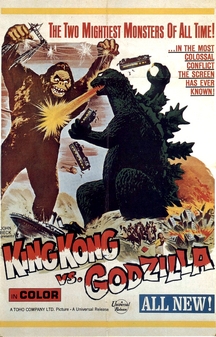 Monsters: Godzilla, King Kong, Giant Octopus
Lowdown - Well, this here is likely the most well known Godzilla film to date, since it's the classic showdown between the two titans of giant monster films. This came about when famed stop-motion animator Willis O’Brien wanted to do a film where King Kong fought a giant monster. After failing to get the rights to use Frankenstein, O’Brien began tossing around the idea of creating a monster. Toho bought the rights to the film and proposed the other monster be their own Godzilla. This film is a turning point in the series and, in contrast to the previous films (and to the displeasure of the crew), the film took a lighter approach to the dark-themed series in order to appeal to a wider audience (read: children). And if you’re wondering about the third monster, the Giant Octopus, they used real octopi to portray the monster. Three of the “actors” were set loose after filming and the fourth….well, it was dinner for Eiji.
The story of the film is about Mr. Tako, a production company head that is tired of rather sad and low ratings. Upon hearing of a giant monster on an island in the ocean, he sends his men to find and possibly collect the beast with the hope of using it to boost his own career. Alas, Godzilla is accidentally released from an iceberg by a U.S. submarine and the race is on to bring Kong back to stop the returning menace.
Even though it has a classic standing, the film isn't exactly favored by fans due to Kong's lacking suit used and the more comedic themes. This film does, however, mark Godzilla's first color appearance. Oh….and despite what you might hear, there is only one ending. There are no alternative endings where were each monster wins.
Godzilla vs. Mothra (1964)
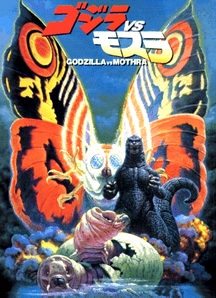 Monsters: Godzilla, Mothra (Larva), Mothra (Adult)
Lowdown - This one might be another familiar title to you, as Mothra is one of Toho's most popular creations. Like many monsters, Mothra got her start in a film without Godzilla in 1961's Mothra. After deciding to have her fight another beast they where planning, they decided to have her go head-to-head with then well-known Godzilla. The anti-nuclear message also returned, as Mothra's island is the victim of tests and the film portrays the resentment of the natives for the people who are part of the society responsible for the testing.
The story this time is of a giant monster egg that suddenly floats onto Japanese land after a hurricane. Two reporters, Sakai and Junko, along with Professor Miura, try to help the Shojobin (two tiny twin sisters who serve as Mothra’s main helpers) regain it from a corporation who bought the egg with intent of turning the area into a tourist trap. To make matters worse, Godzilla also washed ashore with the hurricane and they must convince Mothra and her followers to help them.
The film has gone on to be a cult classic amongst G-fans, as well as the general public. Most of the Suitmation is great with Mothra Adult being the best with her flying animitronics. There's also a scene you can only see in the American Cut—the Japanese people didn't care for the scene where American ships bomb Godzilla on land, so the sequence was cut from the Japanese version.
Ghidorah, the 3 Headed Monster (1964)
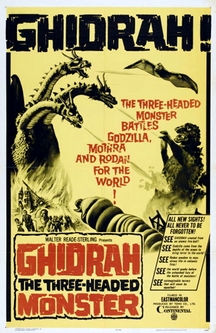 Monsters: Godzilla, King Ghidorah, Mothra (Larva), Rodan
Lowdown - This film is a turning point in the series. For the first time, Godzilla is not the main antagonist of the film. Mothra returns, along with the Shojobin, and brings in Rodan, a pre-historic flying monster that had great success four years prior with his own film Rodan. The film also introduced the newest monster, King Ghidorah, a three-headed flying space dragon. This marks the first time aliens are involved in the series, as Ghidorah is an alien monster.
The story for this film is of a Himilayan Princess, Selgina, who is possessed by the spirit of an alien from Venus and must warn the people of Earth of the monster (King Ghidorah) that killed her people. She also warns a cruise ship and visitors to a volcano of the monsters (Godzilla and Rodan) that are about to awaken there. Her preaching gets the attention of the Shojobin and they decide to summon Mothra in order to prepare for the battles to come. Also, a secret organization is trying to kill the princess for their own benefit, and it's up to the leads—a cop assigned to protect the princess and his sister—to keep the princess safe while avoiding the coming disaster.
All in all, the film is a mixed bag. The King Ghidorah suit was a true work of art for the time, but the story is another step to the lighter side, as well as a prelude for things to come in the Showa series. Also, you might recognize the actress who plays Selgina—she’s well-known as the Bond Girl "Aki" from You Only Live Twice.
Invasion of the Astro-Monster (1965)
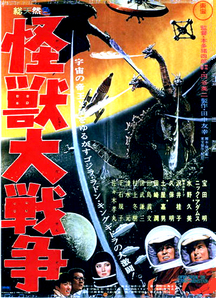 Monsters: Godzilla, Rodan, King Ghidorah
Lowdown - This film is a direct sequel to the previous film. As you can see, for the first time in the series, the film doesn’t have any new monsters. More notable is that this marks the first time in the series that an alien race would invade Earth with the hope of conquering the planet.
The story for this film is that two international astronauts (Glenn from the USA and Fuji from Japan) fly to the mysterious Planet X that's hidden behind Jupiter. Upon arriving, they're greeted by the Xillians, who at first come across as friendly and in need of assistance. When Godzilla, Rodan, and Mothra defeated King Ghidorah, the Space Dragon retreated to Planet X and been giving the Xillians trouble ever since. When the astronauts return to Earth, they're asked by the Xillians if the two Earth monsters that defeated King Ghidorah (Godzilla and Rodan) could make the trip to Planet X to defeat the beast once again. Once they make the trip back with Godzilla and Rodan, the earthlings are surprised to find out the Xillians have other plans…
This film is viewed as a step up from the last one, with better filming and greater special effects. This does, however, mark one of the many laughable and embarrassing moments in Godzilla history as it has the scene of Godzilla dancing…go head, laugh. Also, the film stars Nick Adams, a well-known American Actor from the 50's and 60's.
Godzilla, Ebirah, and Mothra: Big Duel in the South Seas (1966)
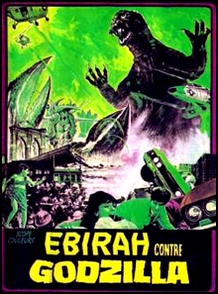 Monsters: Godzilla, Ebirah, Mothra (Adult), Giant Condor
Lowdown - It's here that the “island films” begin, as the story for this and the next few films revolves around an island inhabited by the monsters. This film introduces Ebirah (a giant crustacean) and Giant Condor (you can guess what it is). Once again, Mothra returns, this time in adult form, as do the Infant Island natives that worshiped her.
The story is that Ryota has a plan to find his older brother, Yato, who's lost at sea. Along with two friends, he steals a yacht and, much to their surprise, there is a bandit stowed away on the boat. After a hurricane, they crash land on an island that's controlled by The Red Bamboo, an organization that has been enslaving natives from Infant Island to work for them. Escape is impossible, as Ebirah guards the waters to the island (with only a special juice from the local fruit helping to repel it), while Giant Condor guards the air. When the brothers find Godzilla has been resting in a cavern, they get an idea to foil the diabolical plans of The Red Bamboo.
All in all, this film isn't one of the best. Ebirah and GC don't offer much of a threat to Godzilla. The Suitmation for Godzilla isn't the greatest either, although Ebirah is impressive. The more light-hearted themes really take root in this film and continue on through the rest of the series.
Son of Godzilla (1967)
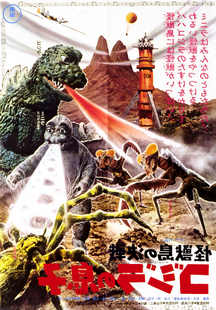 Monsters: Godzilla, Minilla, Kumonga, Kamacarus
Lowdown - All you have to do is look at the name to get what kind of film this is. The most clever joke I saw for this film was "Godzilla's got a reason to smoke". Minilla is introduced as Godzilla's son, and well…he’s a fun monster, depending on your age. Kamacarus comes in as the giant praying mantis formerly known as Gimantis. Kumonga, the real villian of the film, is a giant spider formerly nicknamed Spiga.
The story takes place on Sollgell Island, where a group of scientists are working on creating weather controlling technology. Things get interesting when a reporter flies in with hopes of a big scoop and a mysterious native girl is living at the other end of the island. Things take a turn for the worse when the scientist’s tests accidently causes a nuclear explosion, which then causes some local oversized praying mantises to get bigger and a big spider goes from just big to huge. The mantises dig up a giant egg that hatches the offspring of Godzilla, and sensing it's in danger, Godzilla comes to protect his kin.
The fans are pretty divided on this film. Kids will love the movie and I don't think there's a single young fan that hasn't tried doing Minilla's voice. If you’re of the older variety…you might at least get a laugh.
So, I hoped you've enjoyed all this information. This is only the first half of the Showa series, as we have another 7 films to go. With luck, some people might take interest and, instead of just jumping in in the middle of it all, can start at the beginning and see the films in the order they were originally presented to the world. Thank you to all and hope to see you again.
|
 by:
by: